Water Heater Services
Water Heater Expansion Tank Service in Lebanon, PA
On a closed plumbing system, heated water has nowhere to go — and the pressure spikes stress everything. A properly sized expansion tank fixes that and supports code.
- Licensed & insured service approach
- Same-day service available
- Tank & tankless experts
- Upfront options before work begins
- Local Lebanon County service
- Emergency water heater help
Most homeowners have never heard of a thermal expansion tank. Then they get a new water heater installed and the inspector or installer asks about it, or they start noticing pressure fluctuations and a T&P valve that drips. At that point, the expansion tank conversation becomes necessary — and often urgent.
Here's the issue. A water heater takes cold water and heats it. When water heats, it expands. In an older open plumbing system, that expanded water had somewhere to go — it could push back toward the supply main. In a closed system — which describes most homes today, where a backflow preventer or pressure reducing valve blocks that return path — the expanded water has nowhere to go. Pressure builds inside the tank and pipes every time the unit fires. Over time, that pressure cycling stresses the tank, shortens element and fitting life, and can cause a T&P valve to drip. An expansion tank absorbs the pressure surge and protects the whole system.
Code in Pennsylvania and many municipalities now requires expansion tanks on closed systems. If you're installing a new water heater, replacing an old one, or failing an inspection, the expansion tank conversation is coming. We handle it cleanly and correctly.
What we cover
- Thermal expansion tank installation on closed systems
- Expansion tank sizing for your system pressure
- Pressure testing before and after installation
- Existing expansion tank inspection and replacement
- T&P valve pressure assessment in context of thermal expansion
- Backflow preventer and pressure reducing valve identification
- Code-compliance documentation for inspections
- Integration with new water heater installations
- Expansion tank pre-charge pressure verification
- System pressure relief and protection of fixtures and appliances
Why closed systems need an expansion tank
A backflow preventer keeps contaminated water from flowing back into the municipal supply. A pressure reducing valve regulates the pressure entering your home. Both of them — by design — block water from moving backward in the supply line. That's the protection they're there to provide. The side effect is that when your water heater heats 40 or 50 gallons of water and that water expands, there's nowhere for the pressure to go.
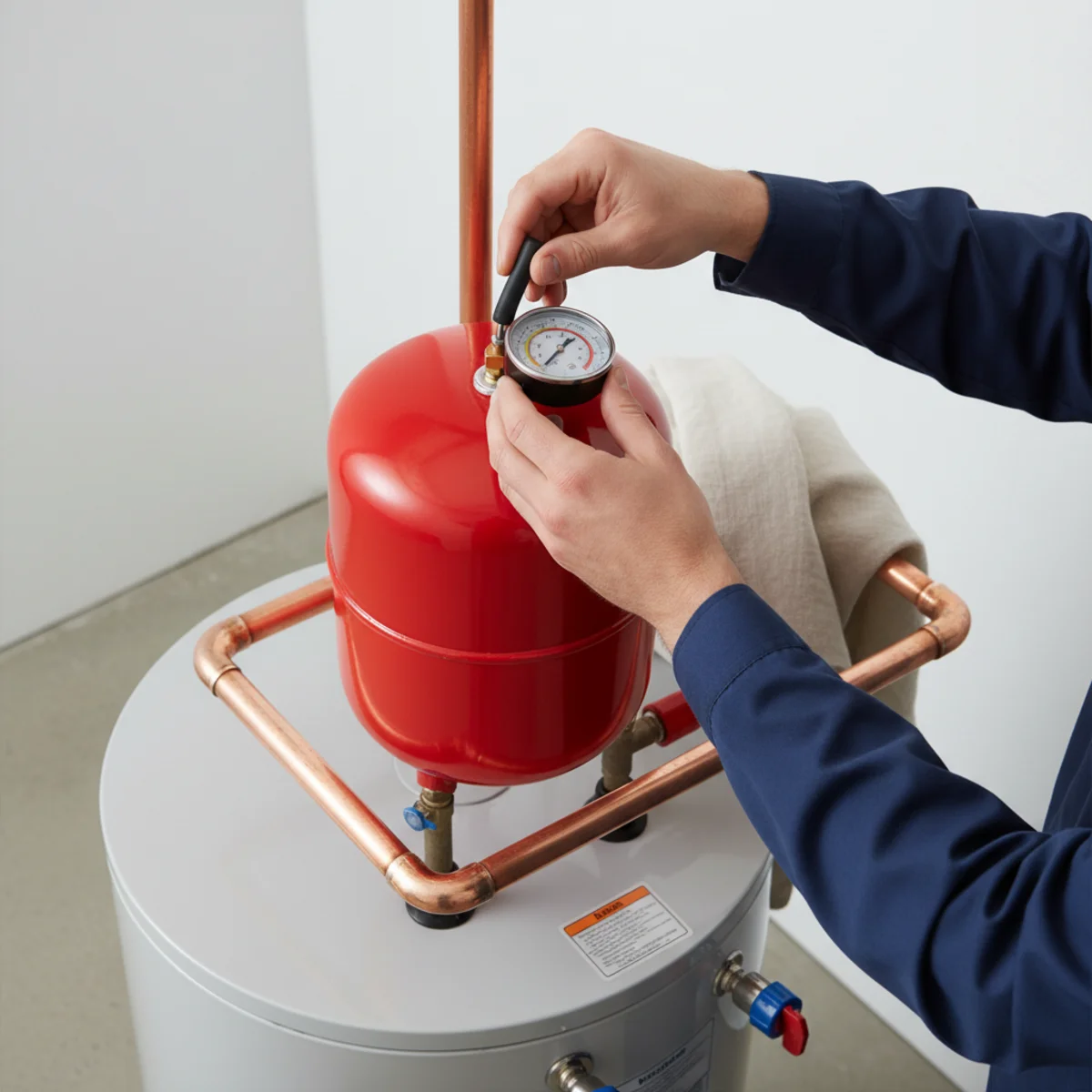
A thermal expansion tank — typically mounted on the cold-water inlet line near the water heater — contains a rubber bladder and an air charge. When heated water expands, the bladder compresses slightly and accepts the pressure increase. When the system draws hot water, the bladder returns to its resting position. The pressure cycling that would otherwise stress your tank and fittings never happens.
It's a small component with a large impact on how long your water heater and plumbing system hold up. Getting it properly sized and pre-charged to your system pressure is what makes it actually work.
Code compliance: when an expansion tank is required
Pennsylvania plumbing code, following the Uniform Plumbing Code framework, requires an expansion tank when a backflow preventer creates a closed system. Many local jurisdictions and water utilities echo that requirement. In practice, most water heater installations in Lebanon County today require an expansion tank.
If you're replacing an existing water heater and the old install didn't have one — common in homes built before the code requirement was widely enforced — the new installation needs to include it. Skipping it can cause an inspector to reject the permit, or worse, leave your system running under repeated pressure spikes that shorten the new tank's life significantly.
Our water heater installation work always includes an expansion tank assessment, and we include it when the system requires it. No scrambling to add it after inspection.
Signs your existing expansion tank has failed
Expansion tanks don't last forever. The rubber bladder inside can deteriorate, and the air pre-charge can dissipate. When that happens, the tank fills with water and stops doing its job. Signs that an existing expansion tank may have failed include a T&P valve that drips or opens periodically, pressure fluctuations you can feel at fixtures, and water hammer sounds when the system shifts from heating to standby.
Testing an expansion tank is straightforward: tap it on the side when the system is warm. A functioning tank should sound hollow at the top and slightly full at the bottom. A waterlogged tank sounds full throughout — the bladder has failed and the tank needs replacement. This is a quick check we perform any time we're working near the water heater.
Protecting the whole system, not just the water heater
Thermal expansion doesn't only stress the water heater. The pressure cycling affects every component between the water heater and the fixtures — supply line connections, shutoff valves, fittings at appliances, and the connections to dishwashers and washing machines. Homes with older plumbing or corroded fittings are particularly vulnerable, because those components have less margin before a pressure spike causes a failure.
If you've been dealing with unexplained drips at shutoff valves, fittings that seem to loosen over time, or a T&P valve that trips on its own, thermal expansion may be the underlying cause. Solving it is usually a single expansion tank installation — a modest investment that protects a much more expensive system.
Local & dependable
Built for Lebanon County homes
Lebanon County's housing stock includes a wide range of plumbing configurations. The historic homes in Annville and downtown Lebanon often have older plumbing where backflow prevention may have been added during a water utility upgrade without any concurrent change to the water heater setup — creating a closed system without anyone realizing it. Newer homes in Cornwall and Palmyra are built to current code and typically have expansion tanks as part of the original install, but those tanks have a service life and need periodic inspection. We work across all of it: diagnosing thermal expansion problems in older ZIP 17042 row homes, verifying expansion tank condition in newer 17046 builds, and making sure every water heater installation we touch is set up to handle pressure correctly from day one.
Simple & transparent
What to Expect on a Service Visit
No mystery, no runaround — here's exactly how a visit works, from your first call to clean hot water.
- 1
Call or request service
Tell us what your water heater is doing — no hot water, a leak, strange noises — and we set up a same-day or scheduled visit.
- 2
Inspect the unit & connections
We check the tank, burner or elements, thermostat, valves, venting, and the surrounding plumbing for the real cause.
- 3
Diagnose & explain options
You get a straight diagnosis and clear repair-or-replace options with upfront pricing before any work begins.
- 4
Complete the approved work
Once you choose, we complete the repair or installation cleanly, to code, with quality parts.
- 5
Test, clean up & advise
We confirm hot water is back, clean the work area, and share simple maintenance tips for our local water.
No surprises
Honest, Upfront Pricing — No Hidden Fees
The number we give you before we start is the number you pay. No mystery trip charges, no estimate that balloons on the invoice, and no pressure to replace a unit that can be fixed.
Upfront price, every time
You get a clear price before any work begins — never a vague “we'll see when we get there.”
No surprise trip fees
What we quote is what you pay. No mystery charges quietly added to the final invoice.
Honest repair-or-replace advice
If a fix makes more sense than a replacement, we say so. We don't upsell a tank that has good years left.
No-pressure recommendations
We lay out your options with typical, estimated ranges, then let you decide on your own timeline.
Why us
Why Homeowners Choose Lebanon Water Heater Pros
Genuinely local
We focus on Lebanon and the surrounding county, so we know the older basements, the hard water, and the cold-snap failures firsthand.
Fast response
No hot water is an emergency. We prioritize same-day appointments and clear arrival windows instead of vague all-day waits.
Licensed & insured approach
Work is handled by licensed, insured local pros who follow Pennsylvania code — and we tell you straight when a permit is involved.
Clear communication
You hear what's wrong, what your options are, and what each one costs before anyone picks up a wrench.
Upfront options
Repair or replace, tank or tankless — we lay out the honest trade-offs so you decide, with no pressure.
Respect for your home
Drop cloths, clean shoes, and a tidy work area. We leave your utility room better than we found it.
Related services
More ways we can help
Water Heater Installation
New installs and remodels with proper venting, gas/electric hookups, and tidy, lasting connections.
Learn moreWater Heater Replacement
Code-compliant replacement with old-unit removal, correct sizing, and clean connections.
Learn moreCode Upgrades
Venting, shutoffs, pans, pressure valves, and expansion tanks brought up to pass inspection.
Learn moreWater Heater Repair
Fast diagnosis and repair for gas and electric units — no hot water, leaks, noises, and pilot problems.
Learn moreMaintenance & Tune-Up
Flushing, anode-rod checks, T&P valve testing, and tankless descaling to extend unit life.
Learn moreService areas
Expansion Tanks near you
We serve Lebanon and the surrounding communities. Find your town or just give us a call.
Get started
Request service
Tell us what's going on and we'll reach out to confirm a time.
Good questions
Expansion Tanks FAQs
From our blog
Helpful Water Heater Guides
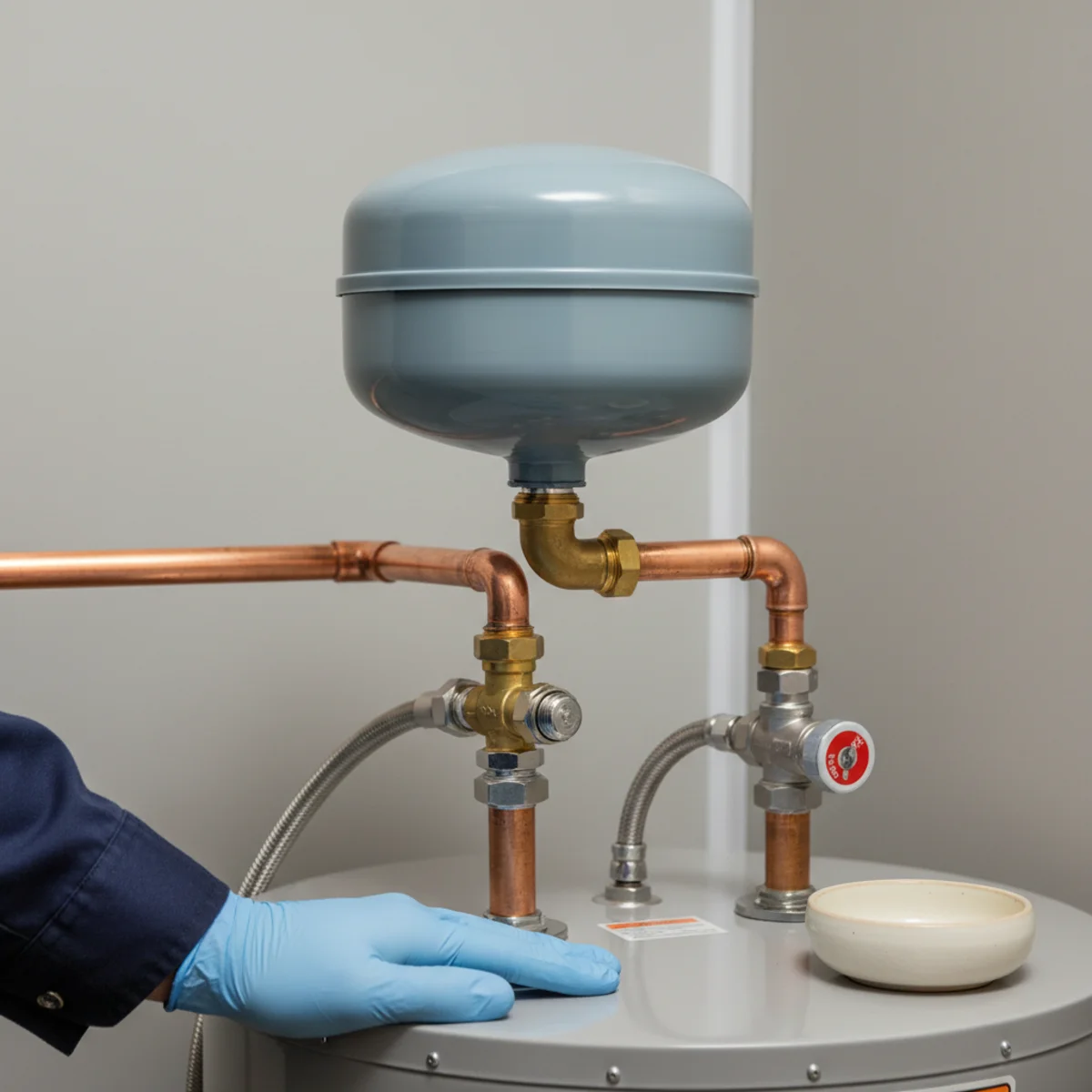
Water Heater Expansion Tanks, Explained
An expansion tank is a small component that protects your water heater and home plumbing from pressure damage. Many Lebanon County homes need one by code — here is why.
5 min read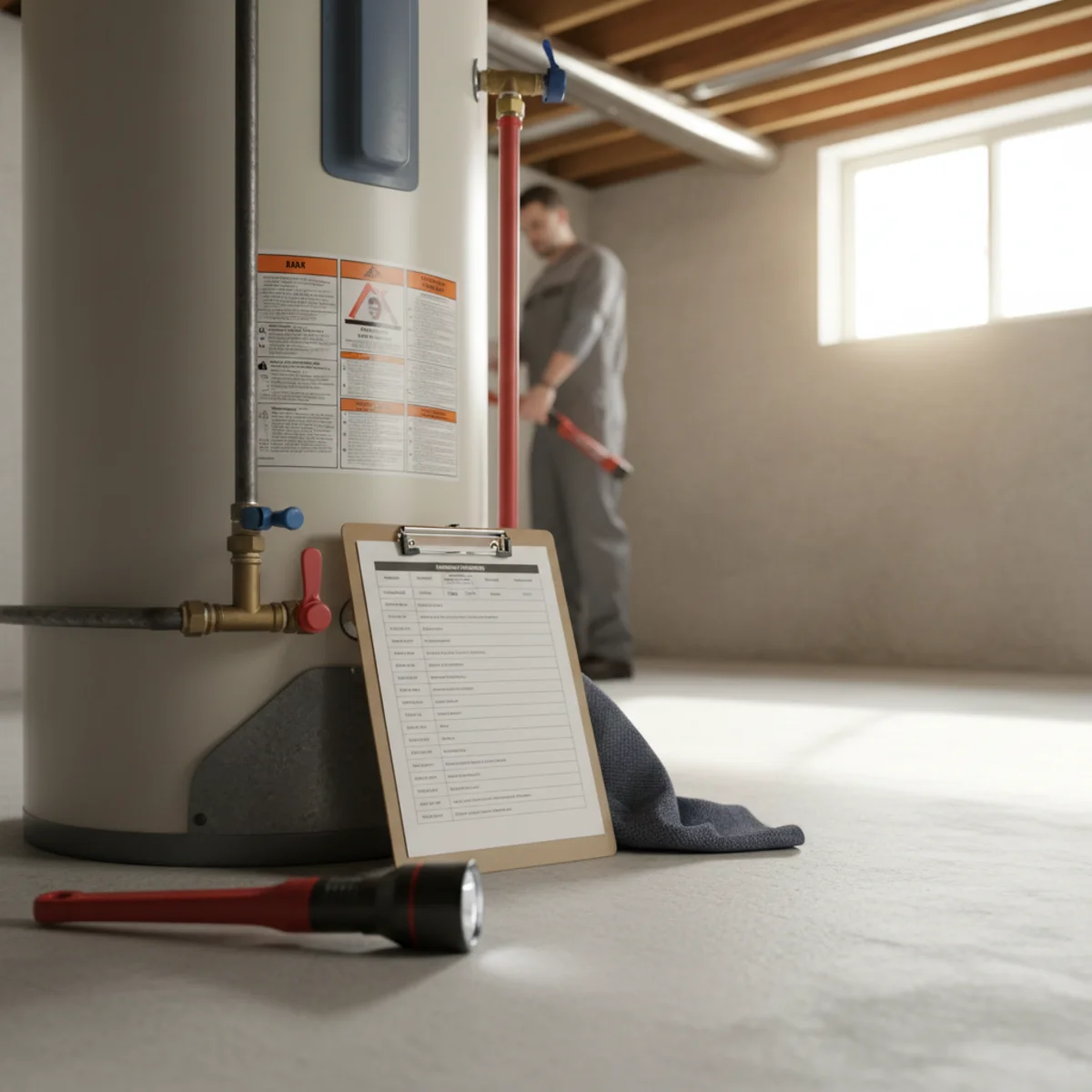
The Annual Water Heater Maintenance Checklist
Annual water heater maintenance takes less than an hour and can add years to your unit's life. This checklist covers every task worth doing—especially in Lebanon County's hard water.
7 min read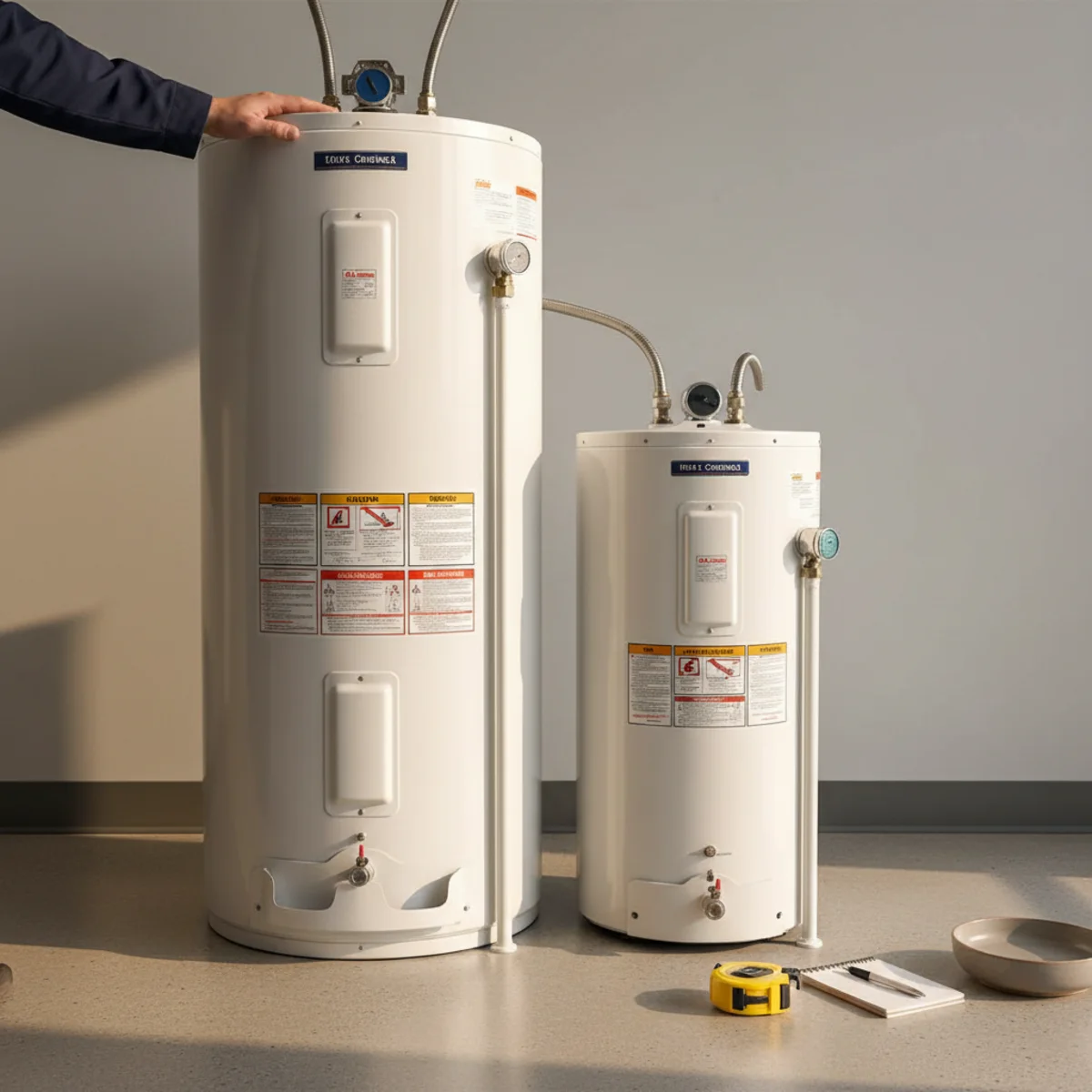
What Size Water Heater Do I Need? A Simple Sizing Guide
A water heater that's too small leaves people cold. One that's too large wastes energy every single day for years. Getting the size right is the most important decision in the buying process.
6 min readCall now for water heater service in Lebanon, PA
Repair, replacement, installation, or tankless — talk to a local crew that knows Lebanon County homes and hard water.
Same-day appointments available • Emergency water heater help