Water Heater Services
Water Heater Installation in Lebanon, PA
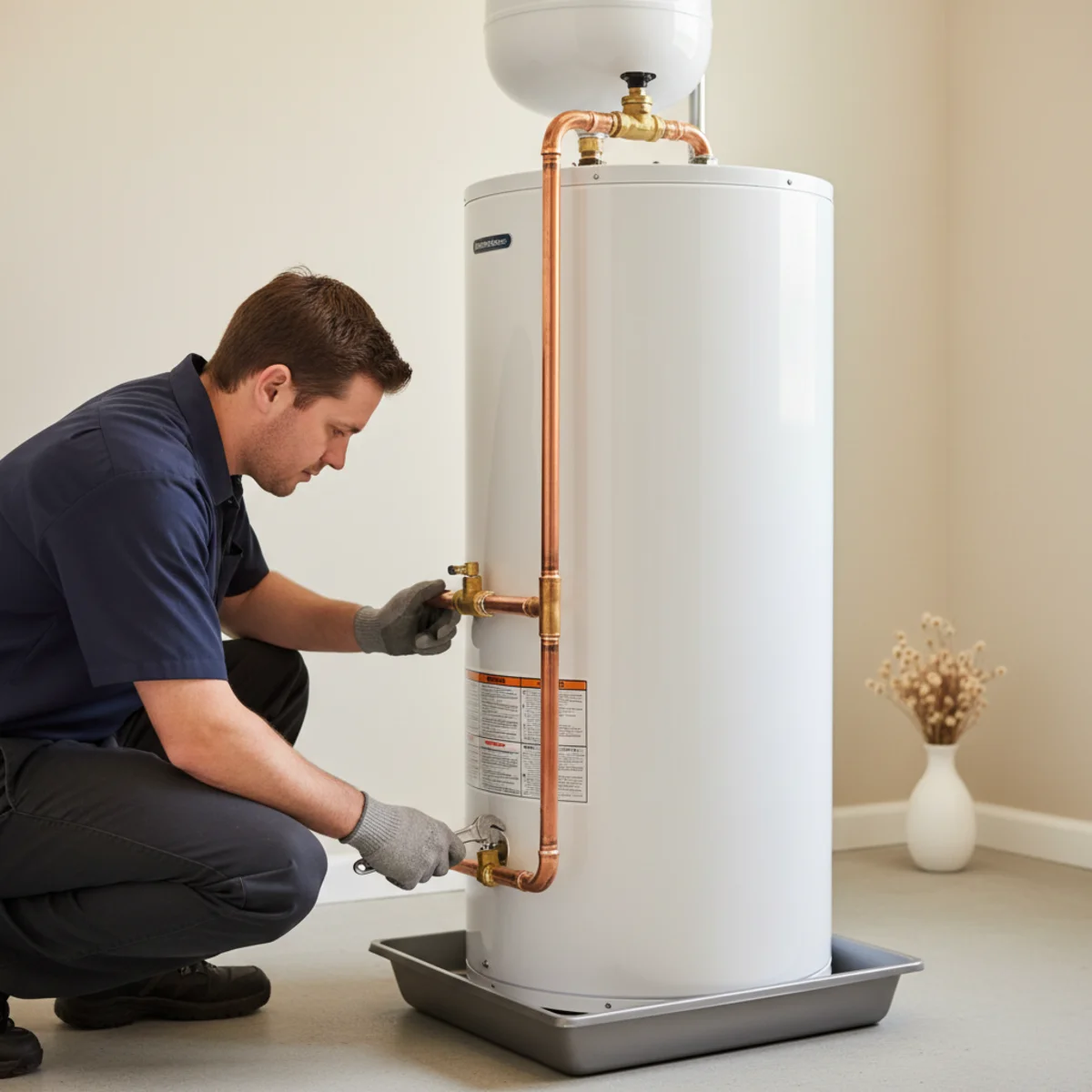
From new construction to basement and utility-room swaps, we install tank and tankless water heaters with proper venting, correct hookups, and connections built to last.
- Licensed & insured service approach
- Same-day service available
- Tank & tankless experts
- Upfront options before work begins
- Local Lebanon County service
- Emergency water heater help
A water heater is only as good as the installation behind it. A unit connected sloppily — wrong-size venting, a missing expansion tank, shutoffs that bind — will fail early and may not pass inspection when you go to sell the house. Getting it right the first time is always cheaper.
New construction, a basement remodel, an addition that needs its own hot water supply, or a straight replacement that turns into a real installation when the old connections are too far gone — we handle all of it. The job isn't finished until the venting draws correctly, the connections are leak-free, and the unit fires and holds temperature.
Our local crew brings upfront pricing before any work begins, so you're not surprised when the invoice arrives. Licensed and insured local pros, clean work, and no shortcuts on the connections that matter.
What we cover
- New water heater installation in new construction
- Basement and utility-room installs
- Addition and remodel water heater hookups
- Replacement installs with updated connections
- Proper gas line connections and leak checks
- Electric panel and wiring connections
- Correct flue and venting for gas units
- Expansion tank installation on closed systems
- New shutoff valves, drip pan, and T&P discharge
- Code-ready installation ready for inspection
Installation details that determine how long a unit lasts
Most water heater failures aren't the unit's fault — they're the fault of an installation that cut corners. We look at four things on every job:
- Venting — on gas units, the flue diameter, pitch, and termination determine whether combustion gases exit safely. Wrong venting is a carbon-monoxide hazard, not just a code violation.
- Expansion tank — closed plumbing systems need one. Without it, thermal pressure cycles stress the tank and the T&P valve constantly.
- Connections — dielectric unions where copper meets the tank, properly torqued fittings, and a shutoff that actually shuts off.
- Drip pan and drain — a pan with a proper drain line, so a small leak doesn't become a flooded basement.
Gas and electric installs — each handled correctly
Gas installations involve more steps: sizing the supply line, verifying pressure, making a tight connection, and testing for leaks before the unit fires. We check combustion and venting before we call the job done. For electric installs, we verify the circuit is properly sized for the unit, make clean connections at the panel, and confirm the element and thermostat are set correctly before the water heats.
For homes converting from electric to gas or vice versa, we'll walk you through what the switchover involves — including any panel or gas-line work — before any work begins.
New construction and remodel installs
Getting the rough-in right in a new build or a remodel saves a lot of headaches later. We coordinate with the general timeline, locate the unit where access and venting work best, and make sure the connections are where they need to be before walls close in. If a tankless unit fits the project better, we'll say so — see our tankless installation page for details.
Upfront pricing and no surprises
We quote the full job — unit, labor, expansion tank, venting materials, and any permit fees — as a typical estimated range before work starts. Access matters: a basement with clear lines and a standard 7-foot ceiling is straightforward; a tight utility closet in an older home takes longer and costs a bit more. We flag all of that up front so the final invoice matches what you were told. If you're replacing an existing unit, see our replacement page for what that specific job includes.
Compare your options
Which Water Heater Type Fits Your Home?
Tank, tankless, gas, electric, or heat pump — here's how the common options stack up for a Lebanon County home.
| Type | Best for | Efficiency (UEF*) | Avg. lifespan | Space |
|---|---|---|---|---|
| Gas storage tank | Homes with natural gas; high hot-water demand | Moderate (UEF ~0.60–0.75) | 8–12 yrs | Large footprint; venting clearance required |
| Electric storage tank | Homes without gas service; lower upfront cost | Standard (UEF ~0.90–0.95) | 10–15 yrs | Large footprint; no venting needed |
| Gas tankless | High demand; limited space; long-term savings | High (UEF ~0.82–0.96) | 15–20 yrs | Compact, wall-mounted; venting required |
| Electric tankless | Small households; point-of-use needs | High (UEF ~0.95+) | 10–15 yrs | Very compact; may need a panel upgrade |
| Heat pump | Maximum energy savings; adequate ambient space | Very high (UEF ~2.0–3.5+) | 10–15 yrs | Large; needs clearance + warm ambient air |
*UEF (Uniform Energy Factor) ranges are typical and should be verified against current ENERGY STAR specifications before purchase. Lebanon County's hard water and sediment can reduce real-world efficiency and lifespan below manufacturer ratings.
Local & dependable
Built for Lebanon County homes
Installation work in Lebanon County ranges from newer townhomes in the Palmyra and Cornwall area — usually straightforward utility rooms with decent headroom and accessible gas lines — to stone-walled basements in historic downtown Lebanon and Annville where every inch counts and the original gas fittings are decades old. Rural homes out toward Jonestown, Fredericksburg, and Schaefferstown on well water add their own wrinkle: inlet water is cold, pressure can vary, and sediment loads are high enough that we factor in a longer first-flush and recommend the right anode rod from day one.
Simple & transparent
What to Expect on a Service Visit
No mystery, no runaround — here's exactly how a visit works, from your first call to clean hot water.
- 1
Call or request service
Tell us what your water heater is doing — no hot water, a leak, strange noises — and we set up a same-day or scheduled visit.
- 2
Inspect the unit & connections
We check the tank, burner or elements, thermostat, valves, venting, and the surrounding plumbing for the real cause.
- 3
Diagnose & explain options
You get a straight diagnosis and clear repair-or-replace options with upfront pricing before any work begins.
- 4
Complete the approved work
Once you choose, we complete the repair or installation cleanly, to code, with quality parts.
- 5
Test, clean up & advise
We confirm hot water is back, clean the work area, and share simple maintenance tips for our local water.
No surprises
Honest, Upfront Pricing — No Hidden Fees
The number we give you before we start is the number you pay. No mystery trip charges, no estimate that balloons on the invoice, and no pressure to replace a unit that can be fixed.
Upfront price, every time
You get a clear price before any work begins — never a vague “we'll see when we get there.”
No surprise trip fees
What we quote is what you pay. No mystery charges quietly added to the final invoice.
Honest repair-or-replace advice
If a fix makes more sense than a replacement, we say so. We don't upsell a tank that has good years left.
No-pressure recommendations
We lay out your options with typical, estimated ranges, then let you decide on your own timeline.
Why us
Why Homeowners Choose Lebanon Water Heater Pros
Genuinely local
We focus on Lebanon and the surrounding county, so we know the older basements, the hard water, and the cold-snap failures firsthand.
Fast response
No hot water is an emergency. We prioritize same-day appointments and clear arrival windows instead of vague all-day waits.
Licensed & insured approach
Work is handled by licensed, insured local pros who follow Pennsylvania code — and we tell you straight when a permit is involved.
Clear communication
You hear what's wrong, what your options are, and what each one costs before anyone picks up a wrench.
Upfront options
Repair or replace, tank or tankless — we lay out the honest trade-offs so you decide, with no pressure.
Respect for your home
Drop cloths, clean shoes, and a tidy work area. We leave your utility room better than we found it.
Smell Gas? Safety Comes Before Service
Gas water heaters are safe when they're set up and maintained right — but a suspected gas leak is an emergency, not a repair call. If you smell rotten eggs or sulfur near a gas appliance, act first and call us second.
We never ask you to troubleshoot a gas leak yourself. Once your gas utility has made the area safe, we handle the burner, thermocouple, gas control valve, flue, and venting — carefully, with combustion and carbon-monoxide safety in mind.
If you suspect a gas leak
- 1Don't flip switches, light a flame, or use anything that could create a spark.
- 2Get everyone out of the house and leave the door open behind you.
- 3From outside, call your gas utility's emergency line or 911.
- 4Don't go back inside or try to find or fix the leak yourself.
- 5Once the utility makes the area safe, call us to inspect and repair the unit.
Related services
More ways we can help
Water Heater Replacement
Code-compliant replacement with old-unit removal, correct sizing, and clean connections.
Learn moreTankless Water Heaters
Tankless install, repair, descaling, and error-code diagnosis — endless hot water, less space.
Learn moreCode Upgrades
Venting, shutoffs, pans, pressure valves, and expansion tanks brought up to pass inspection.
Learn moreExpansion Tanks
Thermal expansion tank installation and service to control pressure and protect your system.
Learn moreGas Water Heaters
Pilot, burner, thermocouple, gas valve, and venting service with a safety-first approach.
Learn moreService areas
Water Heater Installation near you
We serve Lebanon and the surrounding communities. Find your town or just give us a call.
Get started
Request service
Tell us what's going on and we'll reach out to confirm a time.
Good questions
Water Heater Installation FAQs
From our blog
Helpful Water Heater Guides
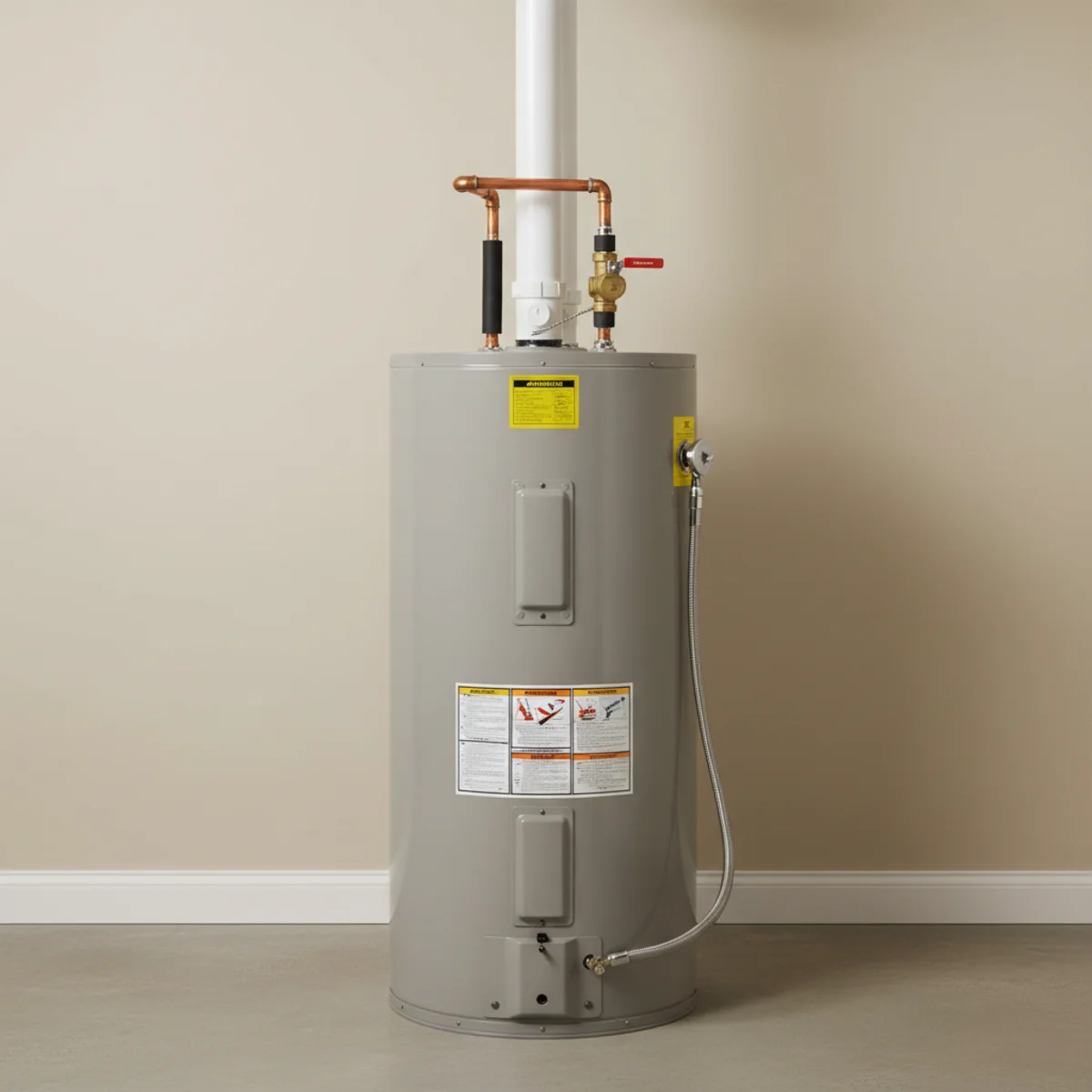
Repair or Replace Your Water Heater? How to Decide
Deciding whether to repair or replace your water heater comes down to age, repair cost, and what the unit has left in it. Here's a practical framework for making that call.
7 min read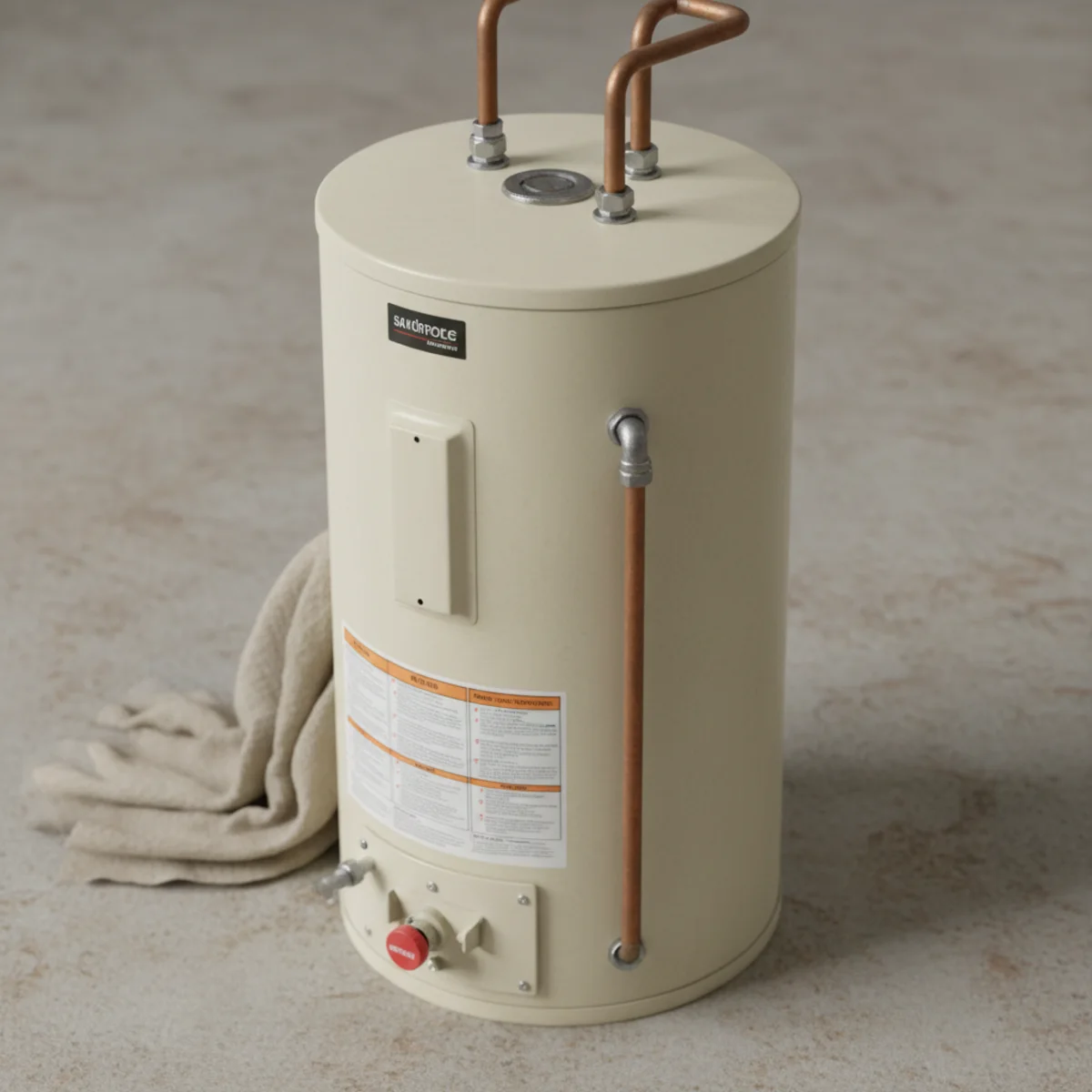
How Long Do Water Heaters Last in Lebanon, PA?
Most water heaters last 8 to 15 years, but Lebanon County's hard water can cut that short. Here's how to know where your unit stands—and when to start planning.
7 min read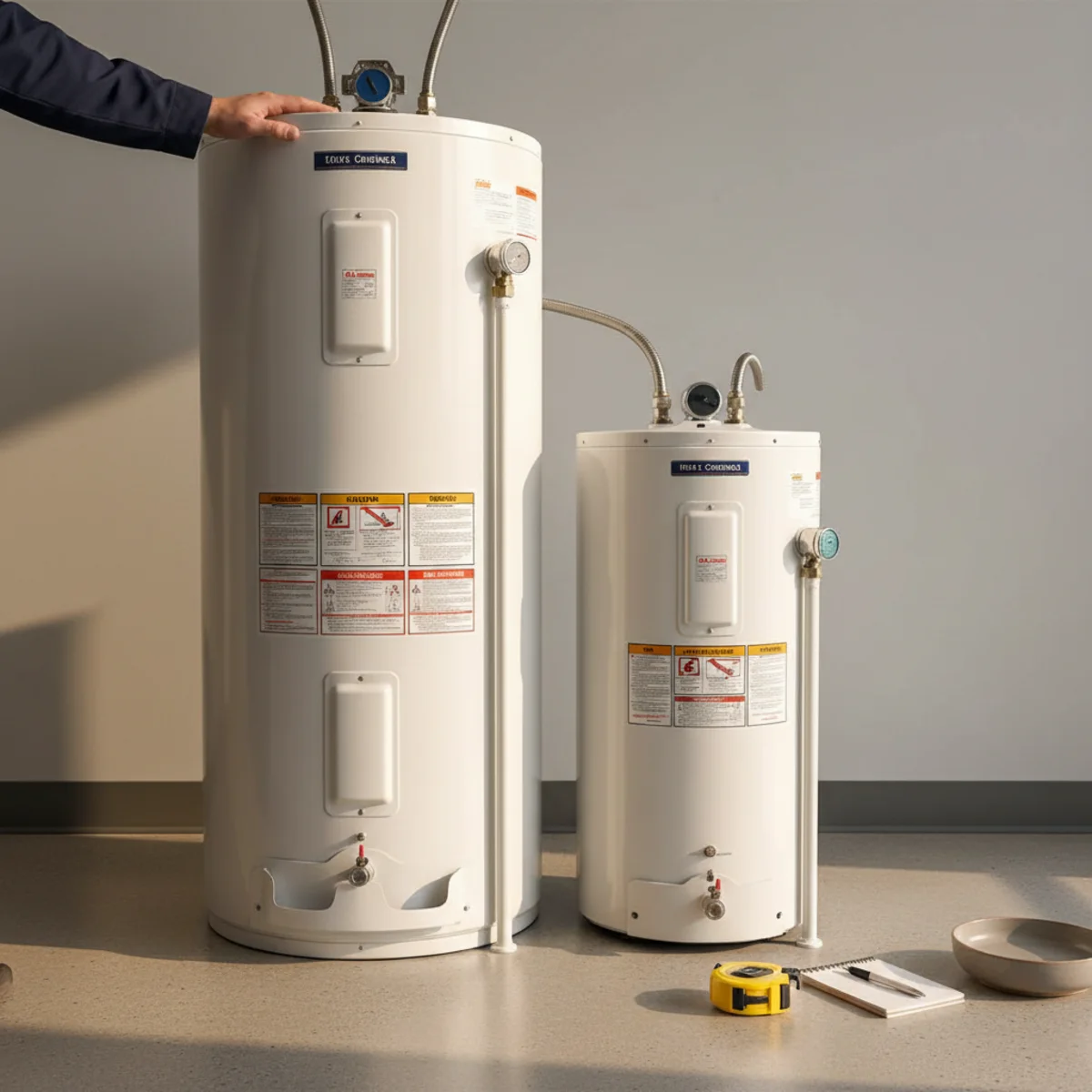
What Size Water Heater Do I Need? A Simple Sizing Guide
A water heater that's too small leaves people cold. One that's too large wastes energy every single day for years. Getting the size right is the most important decision in the buying process.
6 min readCall now for water heater service in Lebanon, PA
Repair, replacement, installation, or tankless — talk to a local crew that knows Lebanon County homes and hard water.
Same-day appointments available • Emergency water heater help