Water Heater Services
Water Heater Code Upgrades in Lebanon, PA
Selling, renovating, or just failed an inspection? We bring older water heater installs up to current code — venting, shutoffs, pans, and expansion protection.
- Licensed & insured service approach
- Same-day service available
- Tank & tankless experts
- Upfront options before work begins
- Local Lebanon County service
- Emergency water heater help
You found out your water heater installation doesn't meet current code. Maybe a home inspector flagged it during a sale, a contractor spotted it during a renovation, or the permit office rejected the install after the fact. It's more common than most homeowners expect — code requirements have tightened over the years, and plenty of older installs that were fine when done are no longer compliant.
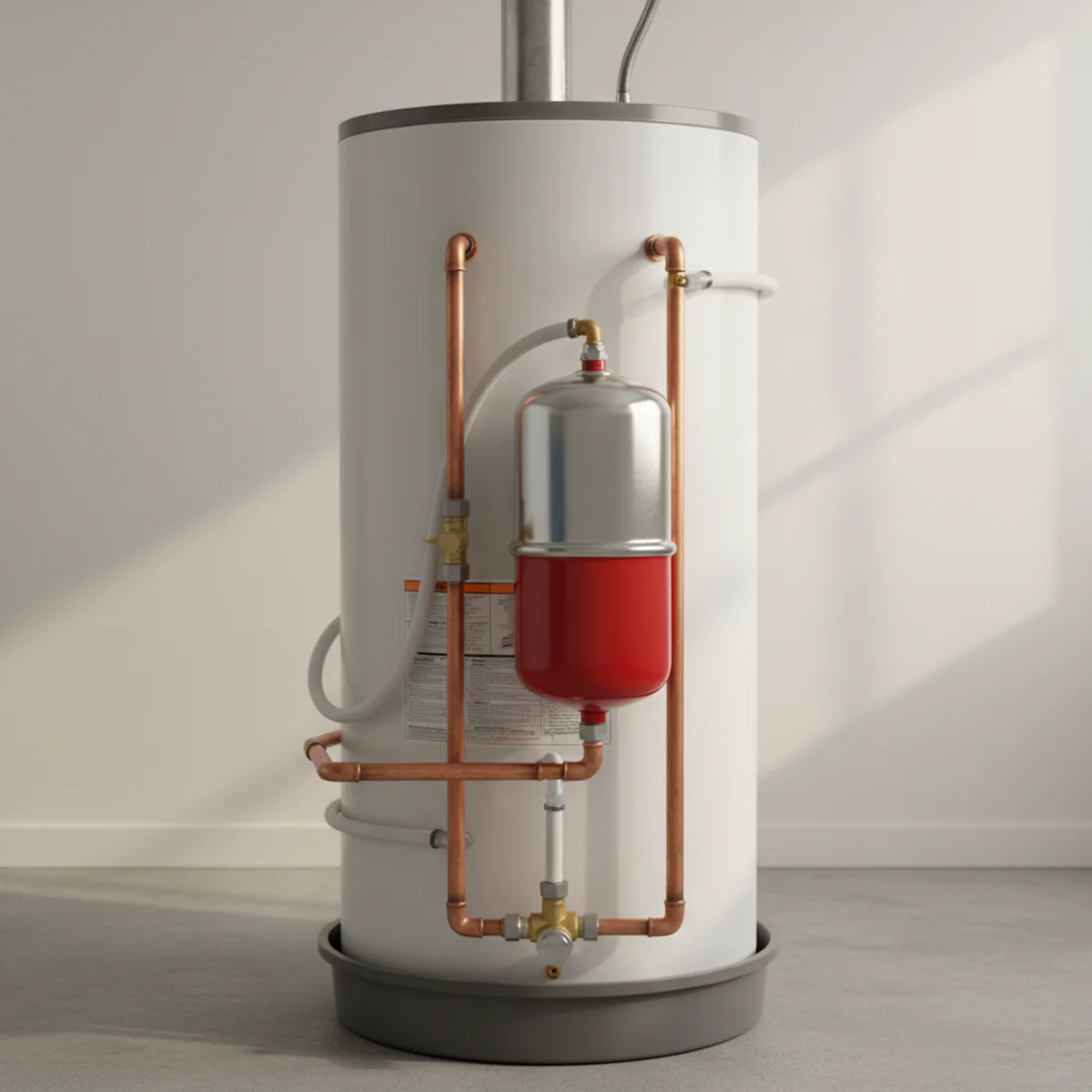
The good news is that most code deficiencies on water heater installations are correctable without replacing the unit. Proper venting, an isolation shutoff valve, a drip pan, a correct T&P discharge line, and an expansion tank are the items that come up most often — and each of them can typically be retrofitted to an existing installation. We handle the assessment, the parts, and the work so that the installation passes the next time someone looks at it.
Selling a home is the most common forcing event. Buyers' inspectors or the buyer's lender may flag water heater code issues and require correction before closing. We turn those around fast, because when you're mid-sale, days matter.
What we cover
- Water heater code inspection and deficiency list
- Dedicated gas shutoff valve installation
- Drip pan installation and proper floor drain routing
- T&P valve discharge pipe correct routing and termination
- Expansion tank installation on closed systems
- Vent flue condition and proper connection upgrade
- Combustion air supply assessment for enclosed spaces
- Seismic strapping where required
- Code-compliant replacement when upgrade isn't practical
- Documentation for permit close-out and inspection
- Fast turnaround for real-estate transaction timelines
The most common code deficiencies we fix
A few issues come up on almost every older water heater install that gets inspected. The T&P valve discharge line is supposed to route to within 6 inches of the floor or to an approved drain — not straight up, not coiled, and not to an exterior wall where it can freeze. Many older installs have the discharge pipe terminated incorrectly or not at all. The fix is a properly sized pipe run to the right location.
A dedicated gas shutoff valve within 3 feet of the unit is code in most jurisdictions. Older installs often relied on a valve farther back in the gas line. Adding a proper shutoff close to the unit is a straightforward piece of work. A drip pan under the water heater, with a drain line routed to an appropriate location, is required when the unit is in a location where a slow leak could damage the structure. Finished basements and upstairs utility closets are typical trigger locations.
The expansion tank requirement has been in the Uniform Plumbing Code for years but wasn't always enforced at local level — so many existing installs lack one. And finally, venting: a deteriorated vent flue, improper slope, or inadequate draft hood clearance on a gas unit is both a code issue and a safety issue we don't defer.
Selling your home: what happens when a water heater fails inspection
A buyer's home inspector flags the water heater install. The buyer's lender or the buyer's agent asks for corrections before closing. Now you have a deadline. We've handled this scenario often enough in Lebanon County that we know how to prioritize, get the work done cleanly, and produce documentation you can send to the inspector or closing attorney.
Most common pre-sale water heater corrections take one service call. Occasionally the deficiencies stack up — no shutoff, missing drip pan, wrong T&P discharge, and no expansion tank all at once — and the question becomes whether correction is more cost-effective than a full replacement. We give you an honest side-by-side and help you make the call. Our water heater replacement page covers what a full code-ready install includes.
Older Lebanon County homes: what to expect
The historic homes in Annville and downtown Lebanon — the ones with stone basements, original utility rooms, and gas lines that predate most current code — are the properties where we see the most stacked deficiencies. Not because homeowners neglected them, but because code has changed substantially since many of those installs were done. A 1980s installation in a stone-foundation basement in ZIP 17042 may have had proper venting for its era and no expansion tank, no drip pan, and a T&P discharge that ran straight to an exterior vent. None of that is current code.
We work through the list methodically. If the unit itself is approaching end of life and the correction cost starts to approach replacement cost, we say so. There's no value in spending heavily to bring a 14-year-old tank into code compliance if it's going to need replacement in a year anyway. But for a unit with years of life left, proper code upgrades are worth doing.
Venting: the code issue with real safety stakes
Improper venting is not just a permit problem. A gas water heater that isn't venting combustion gases properly is putting carbon monoxide into your living space. It's the code issue we take most seriously, and it's one we don't treat as a box-check — we verify draft, check connections, and confirm that the vent flue is in serviceable condition from the unit to where it exhausts.
If you have a gas water heater in a tight utility space — common in the older homes and townhouses throughout Lebanon County — combustion air supply can also be an issue. The burner needs adequate air to burn cleanly; insufficient combustion air produces incomplete combustion and, again, carbon monoxide. We check both the exhaust side and the supply side and make recommendations based on what we find.
Local & dependable
Built for Lebanon County homes
Code upgrade calls concentrate in Lebanon's older neighborhoods — the historic districts around downtown, the stone-foundation homes in Annville, the aging bungalows on Lebanon's east and west sides near ZIP 17046. These are properties where water heater installs haven't been touched since the 1990s or earlier, and current code requirements around expansion tanks, T&P discharge, and gas shutoffs weren't part of the standard practice when the work was originally done. We also see them in rural Lebanon County when a farmhouse changes hands and the buyer's inspector takes a close look at utility systems that have been working fine for decades but haven't been updated to match current code. Whatever the reason you need an upgrade, we do the assessment, quote the work accurately, and execute it so the installation holds up to scrutiny.
Simple & transparent
What to Expect on a Service Visit
No mystery, no runaround — here's exactly how a visit works, from your first call to clean hot water.
- 1
Call or request service
Tell us what your water heater is doing — no hot water, a leak, strange noises — and we set up a same-day or scheduled visit.
- 2
Inspect the unit & connections
We check the tank, burner or elements, thermostat, valves, venting, and the surrounding plumbing for the real cause.
- 3
Diagnose & explain options
You get a straight diagnosis and clear repair-or-replace options with upfront pricing before any work begins.
- 4
Complete the approved work
Once you choose, we complete the repair or installation cleanly, to code, with quality parts.
- 5
Test, clean up & advise
We confirm hot water is back, clean the work area, and share simple maintenance tips for our local water.
No surprises
Honest, Upfront Pricing — No Hidden Fees
The number we give you before we start is the number you pay. No mystery trip charges, no estimate that balloons on the invoice, and no pressure to replace a unit that can be fixed.
Upfront price, every time
You get a clear price before any work begins — never a vague “we'll see when we get there.”
No surprise trip fees
What we quote is what you pay. No mystery charges quietly added to the final invoice.
Honest repair-or-replace advice
If a fix makes more sense than a replacement, we say so. We don't upsell a tank that has good years left.
No-pressure recommendations
We lay out your options with typical, estimated ranges, then let you decide on your own timeline.
Why us
Why Homeowners Choose Lebanon Water Heater Pros
Genuinely local
We focus on Lebanon and the surrounding county, so we know the older basements, the hard water, and the cold-snap failures firsthand.
Fast response
No hot water is an emergency. We prioritize same-day appointments and clear arrival windows instead of vague all-day waits.
Licensed & insured approach
Work is handled by licensed, insured local pros who follow Pennsylvania code — and we tell you straight when a permit is involved.
Clear communication
You hear what's wrong, what your options are, and what each one costs before anyone picks up a wrench.
Upfront options
Repair or replace, tank or tankless — we lay out the honest trade-offs so you decide, with no pressure.
Respect for your home
Drop cloths, clean shoes, and a tidy work area. We leave your utility room better than we found it.
Smell Gas? Safety Comes Before Service
Gas water heaters are safe when they're set up and maintained right — but a suspected gas leak is an emergency, not a repair call. If you smell rotten eggs or sulfur near a gas appliance, act first and call us second.
We never ask you to troubleshoot a gas leak yourself. Once your gas utility has made the area safe, we handle the burner, thermocouple, gas control valve, flue, and venting — carefully, with combustion and carbon-monoxide safety in mind.
If you suspect a gas leak
- 1Don't flip switches, light a flame, or use anything that could create a spark.
- 2Get everyone out of the house and leave the door open behind you.
- 3From outside, call your gas utility's emergency line or 911.
- 4Don't go back inside or try to find or fix the leak yourself.
- 5Once the utility makes the area safe, call us to inspect and repair the unit.
Related services
More ways we can help
Water Heater Installation
New installs and remodels with proper venting, gas/electric hookups, and tidy, lasting connections.
Learn moreWater Heater Replacement
Code-compliant replacement with old-unit removal, correct sizing, and clean connections.
Learn moreExpansion Tanks
Thermal expansion tank installation and service to control pressure and protect your system.
Learn moreGas Water Heaters
Pilot, burner, thermocouple, gas valve, and venting service with a safety-first approach.
Learn moreRental Properties
Fast, reliable water heater service for landlords and property managers — single units to multi-unit.
Learn moreService areas
Code Upgrades near you
We serve Lebanon and the surrounding communities. Find your town or just give us a call.
Get started
Request service
Tell us what's going on and we'll reach out to confirm a time.
Good questions
Code Upgrades FAQs
From our blog
Helpful Water Heater Guides
Repair or Replace Your Water Heater? How to Decide
Deciding whether to repair or replace your water heater comes down to age, repair cost, and what the unit has left in it. Here's a practical framework for making that call.
7 min read
How Long Do Water Heaters Last in Lebanon, PA?
Most water heaters last 8 to 15 years, but Lebanon County's hard water can cut that short. Here's how to know where your unit stands—and when to start planning.
7 min read
What Size Water Heater Do I Need? A Simple Sizing Guide
A water heater that's too small leaves people cold. One that's too large wastes energy every single day for years. Getting the size right is the most important decision in the buying process.
6 min readCall now for water heater service in Lebanon, PA
Repair, replacement, installation, or tankless — talk to a local crew that knows Lebanon County homes and hard water.
Same-day appointments available • Emergency water heater help