What Size Water Heater Do I Need? A Simple Sizing Guide
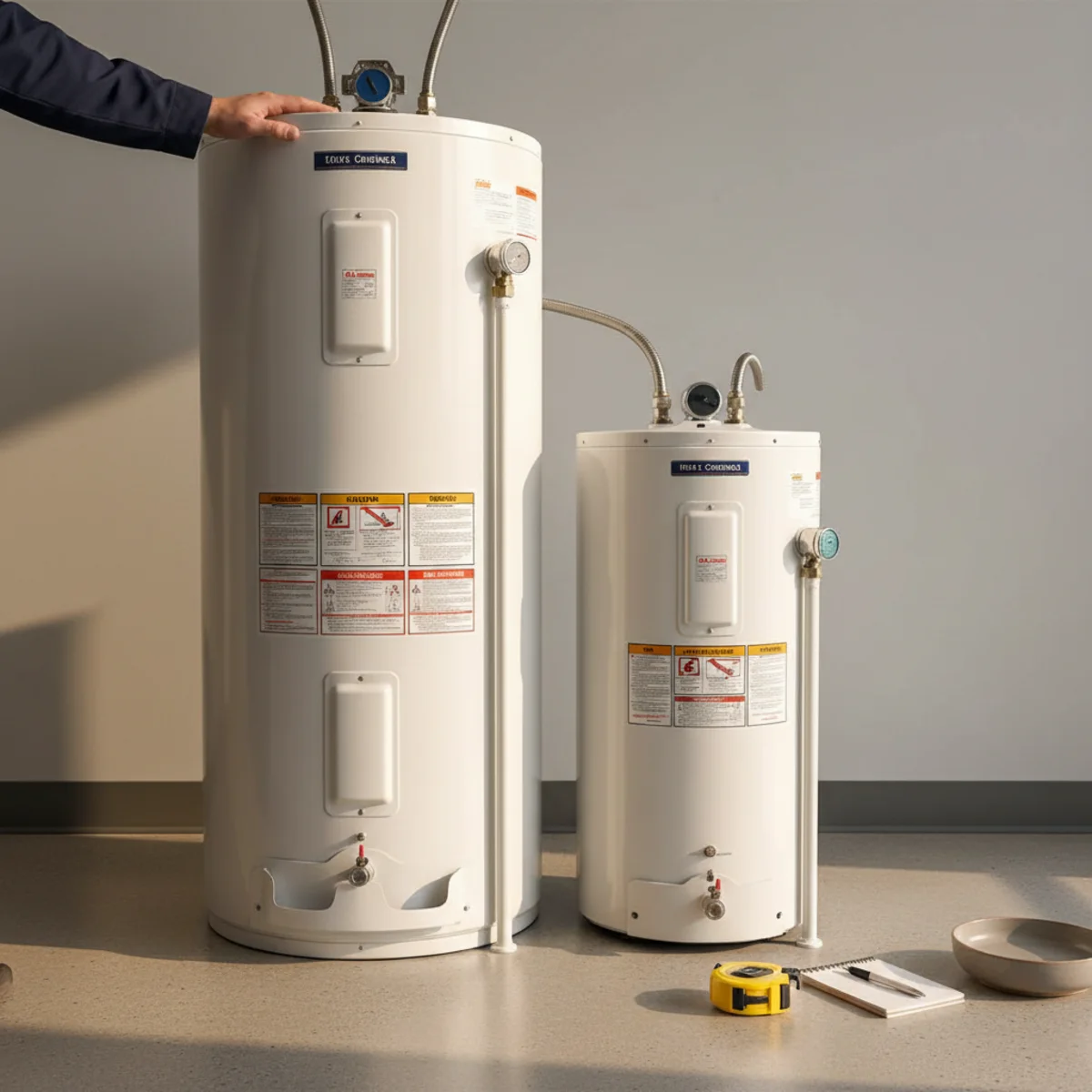
Buying a water heater without getting the size right is like buying a car without checking if it fits in your garage. The capacity needs to match how your household actually uses hot water — not just how many people live there, but when they shower, whether you run the dishwasher and laundry simultaneously, and how your morning routine stacks up. A plumber who just grabs the same size as the old unit is not doing you any favors if your household has changed.
Tank Water Heaters: First Hour Rating Matters More Than Gallons
When shopping tank water heaters, the number to focus on is the First Hour Rating (FHR) — not raw tank capacity. The FHR tells you how many gallons of hot water the unit can deliver in the first hour of use, starting from a full tank. A 50-gallon tank with a powerful burner will have a higher FHR than a 50-gallon tank with a smaller burner.
To estimate the FHR you need, add up how many gallons your household uses during your peak morning hour. Basic estimates per activity:
- Shower: roughly 10 gallons per 8-minute shower
- Shaving or handwashing at a sink: roughly 2 gallons
- Dishwasher: roughly 6 gallons per cycle (hot-water-connected units)
- Clothes washing (warm or hot cycle): roughly 7 gallons
A family of four where two adults shower before work, a dishwasher runs overnight, and one person does laundry in the morning can easily peak above 50 gallons in an hour. Size to your peak, not your average.
General Tank Size Guidelines by Household
These are rough starting points — actual needs vary based on usage habits and fixture efficiency:
- 1-2 people: 30-40 gallon tank
- 3-4 people: 40-50 gallon tank
- 5+ people: 50-80 gallon tank, or consider tankless
Families in older Lebanon County homes with older showerheads and non-low-flow fixtures will trend toward the higher end of each range. Modern low-flow fixtures reduce peak demand and can let you size down.
Tankless Water Heater Sizing: Flow Rate is Everything
Tankless units are sized by gallons per minute (GPM) flow rate rather than storage capacity. The unit has to heat incoming cold water fast enough to supply all simultaneous hot-water draws. To size a tankless unit, you need two numbers: the maximum simultaneous flow rate your household demands, and the temperature rise required (the difference between incoming cold water temperature and your desired output temperature).
Cold water temperature matters a lot in Central PA. In January, Lebanon County groundwater can arrive at the unit at 40 to 45 degrees Fahrenheit. If you want 120-degree output, that is a temperature rise of 75 to 80 degrees. A unit rated for 5 GPM at a 70-degree rise may only deliver 4 GPM at an 80-degree rise. Winter undersizing is a real problem, and it is why we recommend sizing tankless units to your winter conditions rather than summer.
Typical Simultaneous Flow Demands
- One shower running: roughly 1.5-2.5 GPM (depending on showerhead)
- Kitchen faucet running: roughly 1.5-2.0 GPM
- Dishwasher: roughly 1.0-1.5 GPM
Two showers running at the same time plus a faucet is a 5 to 7 GPM demand. A unit sized for 5 GPM will struggle. In homes where multiple bathrooms run simultaneously, either size up aggressively or consider a two-unit setup.
Physical Fit: Don't Forget the Space
Upgrading from a 40-gallon to a 50-gallon tank seems minor on paper, but tank diameter increases with capacity. Measure the clearance in your mechanical room, utility closet, or basement. Electric to gas conversions require a gas line and new venting. Tankless units mount on walls and are compact, but they need proper gas line sizing (or electrical panel capacity for electric models) and dedicated venting — both of which vary significantly by home age and construction.
Lebanon County's older stock of two-story colonials and Cape Cods often have water heaters in tight basement corners where swapping a 50-gallon for a 75-gallon is physically impossible without moving the unit. A plumber who walks the space before recommending a size will save you a lot of frustration at installation day.
Hard Water's Effect on Effective Capacity
A 50-gallon tank with two inches of sediment on the floor is not really a 50-gallon tank. Effective capacity shrinks as sediment accumulates in Lebanon County's hard-water environment. If your current unit feels like it's running out of hot water faster than it used to, sediment may be the culprit before you blame the size. Annual water heater flushing restores effective capacity and is worth doing before you decide you need a bigger unit.
Get a Size Recommendation You Can Trust
Our water heater installation team walks every installation with an upfront assessment — we look at household size, usage patterns, available fuel type, space constraints, and water hardness before recommending a unit. No upselling to a larger tank than you need, and no undersizing a unit that will leave your family cold by the third shower.
Call (201) 277-9344 or schedule online. We carry a range of tank and tankless options and can usually provide a same-day quote for most Lebanon County homes.
Related water heater services
Written by the team at Lebanon Water Heater Pros. This article is general information for Lebanon-area homeowners, not a substitute for an on-site diagnosis. For suspected gas leaks, leave the home and call your gas utility or 911 — do not attempt gas repairs yourself.
Good questions
Frequently Asked Questions
Keep reading
Related articles
Tankless vs. Tank Water Heater: Which Is Right for You?
Tankless water heaters offer endless hot water and longer lifespan, but tank units cost less upfront and work well for most households. Here's how to choose for a Lebanon, PA home.
7 min read
The Best Water Heater for a Rental Property
Rental water heaters get harder use and less attention than owner-occupied ones. Here is how to pick a unit that holds up, keeps tenants happy, and doesn't drain your maintenance budget.
6 min read