Tankless vs. Tank Water Heater: Which Is Right for You?
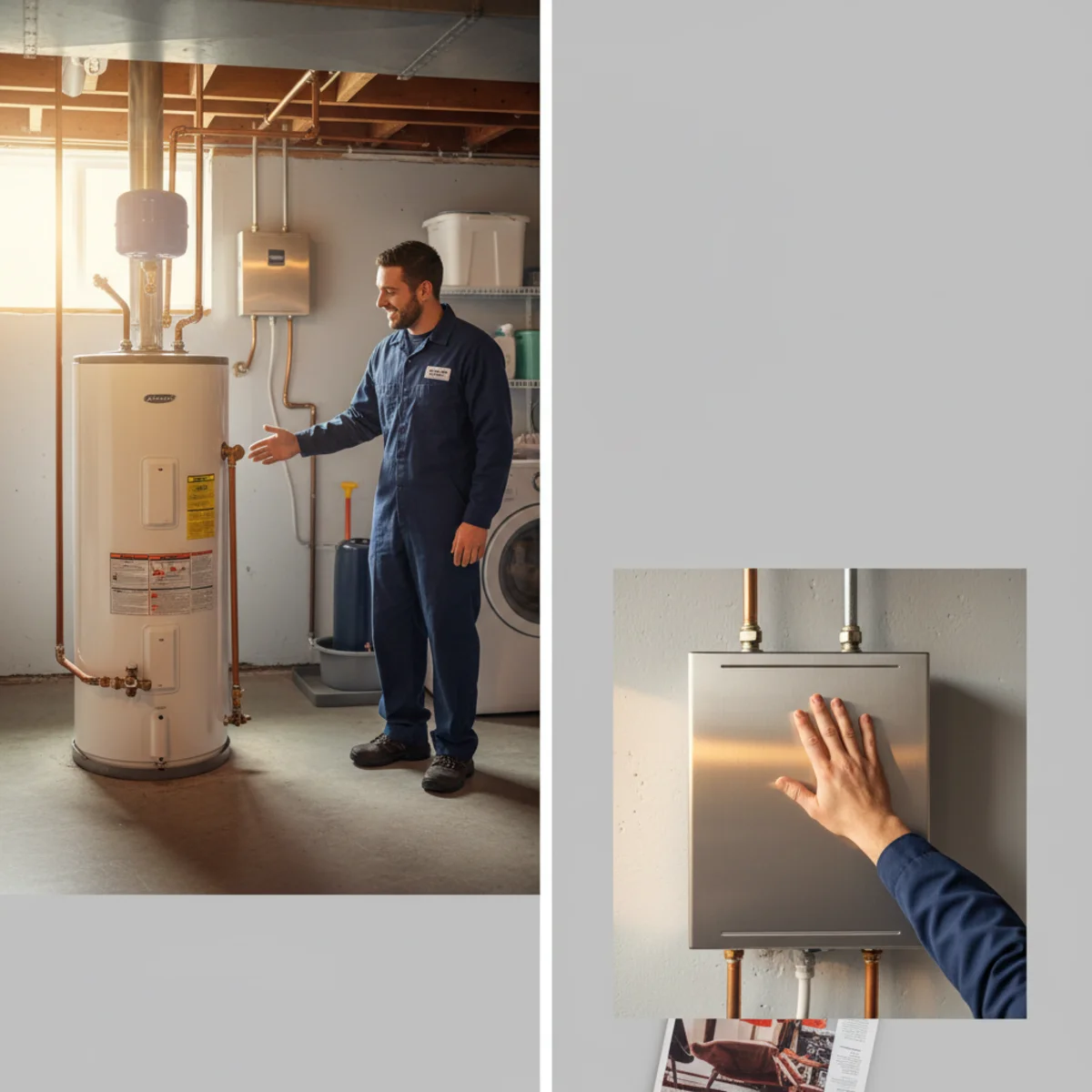
The question comes up every time someone is replacing a water heater: is now the time to go tankless? It's a reasonable thing to weigh. Tankless units have real advantages. They also have real tradeoffs—and in Lebanon County, one of those tradeoffs is our hard water. Here's what you actually need to know to make the right call for your home.
How Each Type Works
A conventional storage-tank water heater maintains a reservoir of hot water—typically 40 to 80 gallons—ready at your taps at all times. It reheats constantly to maintain temperature, even when no one is using hot water.
A tankless (on-demand) unit heats water only when you open a hot tap. Cold water flows through a heat exchanger—gas burner or electric element—and exits at your target temperature. No standing water, no standby heat loss, no tank to corrode.
That basic difference drives almost every advantage and disadvantage of each system.
Where Tank Units Win
- Lower upfront cost: A conventional tank unit—gas or electric—typically costs significantly less to purchase and install than a comparable tankless system. The gap is real and matters for many households.
- Simpler installation: Tank units generally don't require gas line upgrades or electrical panel upgrades. If you're replacing like-for-like, installation is usually straightforward.
- Handles simultaneous demand without flow rate limits: A large tank can supply multiple fixtures at once without a performance penalty, up to its capacity.
- Repair simplicity: Heating elements, thermostats, anode rods—these are well-understood, widely available parts.
Where Tankless Units Win
- Endless hot water: As long as demand doesn't exceed the unit's flow rate capacity, hot water doesn't run out. No recovery time between uses.
- Longer lifespan: Tankless units are generally rated for up to 20 years vs. 8–12 for tank units—though Lebanon's hard water affects both (more on that below).
- No standby heat loss: Tank units lose heat through the tank walls continuously; tankless units only fire when called. General UEF ratings for tankless units tend to be higher than for conventional tanks—but verify current specs against ENERGY STAR listings, as hard water and sediment can reduce real-world efficiency compared to rated figures.
- Space savings: Wall-mounted tankless units free up significant floor space in utility rooms and basements.
- No tank to flood: Without a standing reservoir, there's no catastrophic tank-failure leak scenario.
The Hard Water Factor in Lebanon County
This is the part most generic guides miss. Lebanon County's hard water affects tankless units in a specific way: mineral scale builds up inside the heat exchanger. Unlike a tank where sediment falls to the floor and insulates the burner, scale in a tankless unit can restrict water flow and coat heat exchanger surfaces—reducing efficiency and eventually causing failures.
The fix is annual descaling (flushing with a descaling solution). This is more involved than flushing a tank, and it's a service call you need to commit to. Skip it for a few years in Lebanon's water and you'll see it in the unit's performance—and potentially its lifespan.
A whole-house water softener changes this equation considerably. If you have one, or are open to adding one, the mineral load on a tankless unit drops dramatically and the maintenance burden decreases. Without one, factor annual descaling into your operating cost and commitment level.
Sizing: The Detail That Trips People Up
Tank units are sized by gallon capacity—typically matched to household size. Tankless units are sized by flow rate (gallons per minute) and temperature rise. In Central Pennsylvania winters, incoming groundwater can be quite cold—sometimes below 45°F. The colder the incoming water, the harder it is for a tankless unit to hit your target temperature at a given flow rate. An undersized tankless unit won't keep up when you're running a shower and the dishwasher at the same time.
Getting the sizing right matters. Our post on how to size a water heater walks through the process in detail. For tankless specifically, a professional load calculation that accounts for your household size, simultaneous demand, and incoming water temperature is important—don't rely on rough estimates.
Gas vs. electric tankless
Gas tankless units generally deliver higher flow rates and are better suited to whole-house applications. Electric tankless units are typically used for point-of-use applications or as supplements. A whole-home electric tankless often requires significant electrical panel upgrades. Know what your gas supply and electrical panel can support before deciding.
Which One Is Right for Your Lebanon Home?
A tank unit is likely the better fit if: you want to keep upfront costs down, you're replacing an older tank unit without major system changes, or you're not prepared to commit to annual descaling maintenance.
A tankless unit makes more sense if: you have high or inconsistent hot water demand, you're building or renovating and can size the system properly from the start, you have or plan to add a water softener, or you prioritize long-term energy savings and lifespan over lower upfront cost.
Neither choice is wrong—the right answer depends on your home, your habits, and your budget. Our tankless water heater service and our water heater replacement service both include honest guidance on which direction fits your situation. We'll tell you what actually makes sense—not just what costs more.
Ready to Decide?
If you're weighing your options for a new water heater in Lebanon County, give us a call at (201) 277-9344 or schedule online. We'll assess your current setup, discuss your household's hot water demands, and walk you through upfront pricing before any work begins. Same-day appointments are available for urgent replacements.
Related water heater services
Written by the team at Lebanon Water Heater Pros. This article is general information for Lebanon-area homeowners, not a substitute for an on-site diagnosis. For suspected gas leaks, leave the home and call your gas utility or 911 — do not attempt gas repairs yourself.
Good questions
Frequently Asked Questions
Keep reading
Related articles
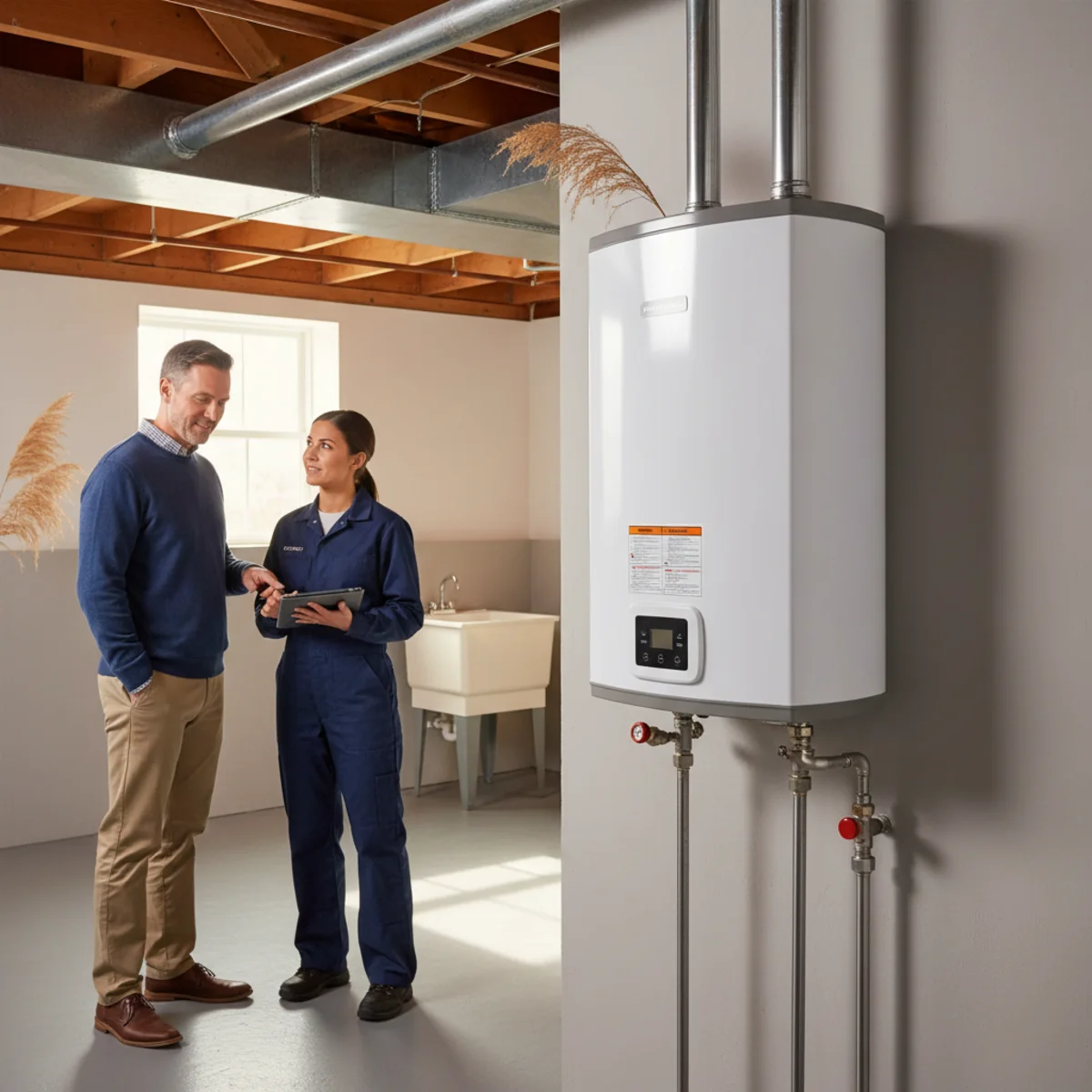
When to Upgrade to a Tankless Water Heater
Tankless water heaters deliver real advantages in the right situation. The key is knowing whether your home and habits match those situations — or whether a good conventional tank is the smarter call.
6 min read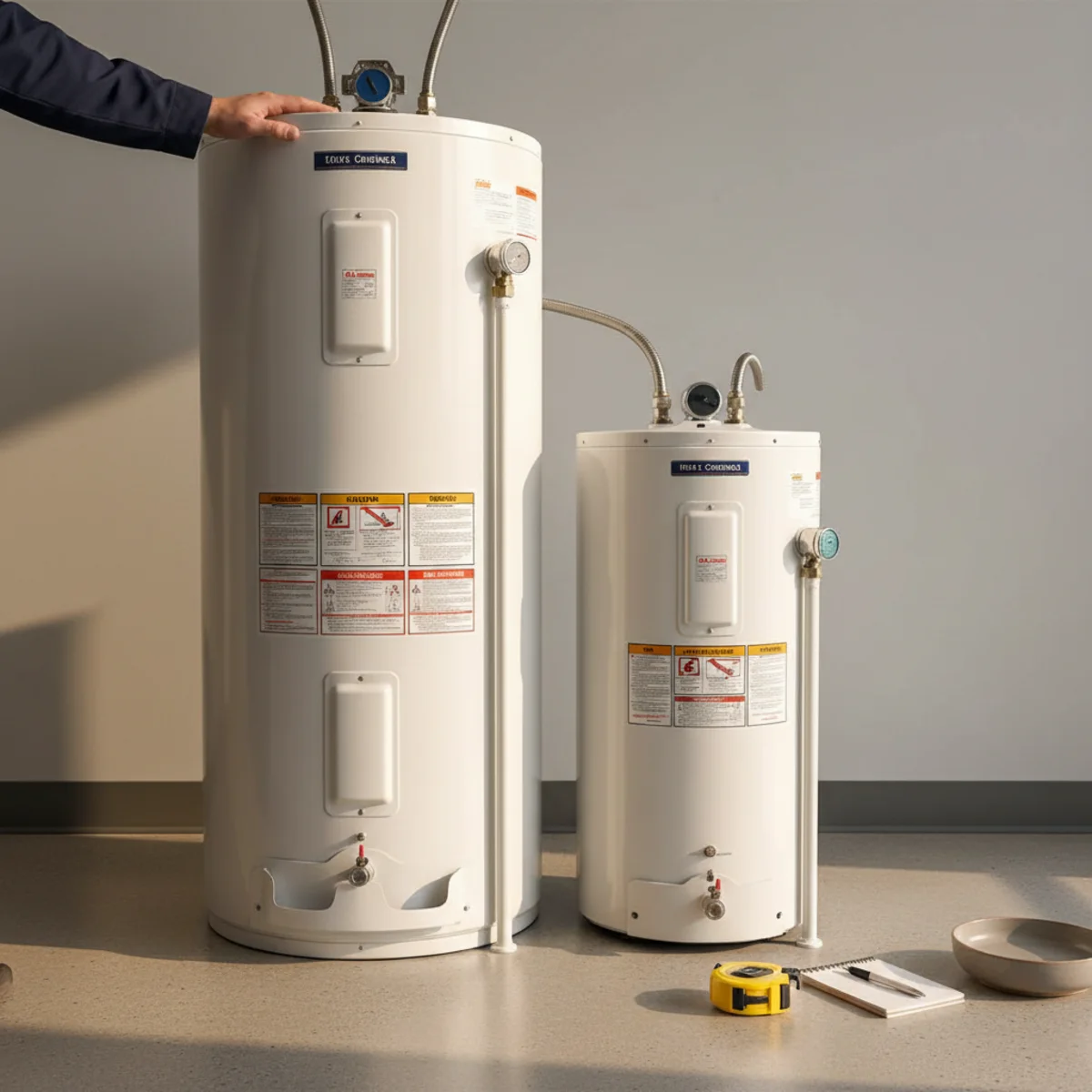
What Size Water Heater Do I Need? A Simple Sizing Guide
A water heater that's too small leaves people cold. One that's too large wastes energy every single day for years. Getting the size right is the most important decision in the buying process.
6 min read