Water Heater Services
Water Heater Leak Repair in Lebanon, PA
Water around the tank isn't always a death sentence. We figure out whether it's a fitting, a valve, or the tank itself — and give you the honest path forward.
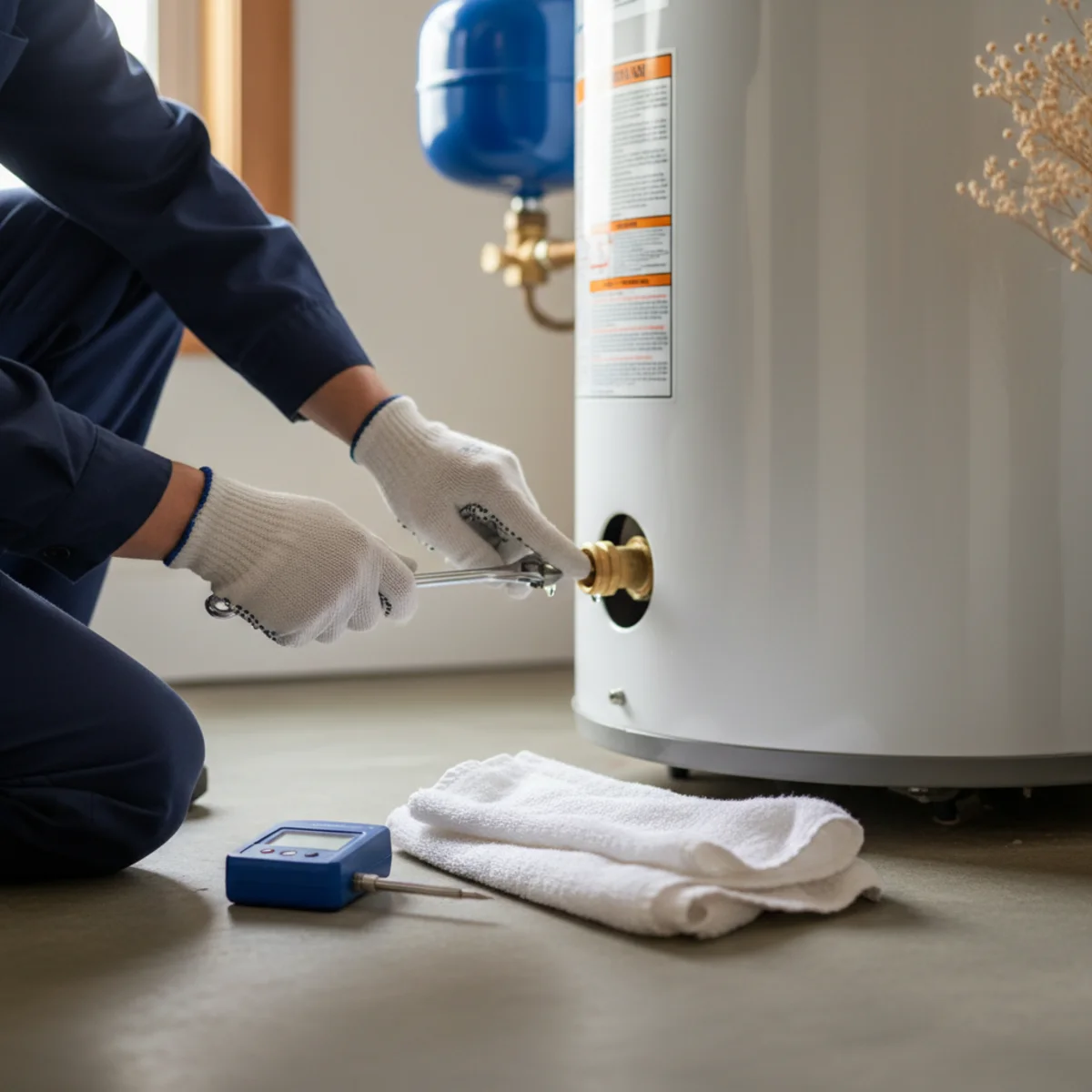
- Licensed & insured service approach
- Same-day service available
- Tank & tankless experts
- Upfront options before work begins
- Local Lebanon County service
- Emergency water heater help
Water around the base of your water heater is not something to watch and wait on. Standing water damages flooring, subfloor, and finished spaces fast — and some leaks signal a tank that's about to fail completely. The first thing to do is figure out where it's coming from. That distinction drives everything: whether you need a quick fitting repair or a full replacement.
Not all water heater leaks mean the tank is dead. Fittings, drain valves, T&P valves, and inlet and outlet connections all develop leaks that can often be repaired without replacing the unit. A tank-body leak is different — that usually means corrosion has worked through the steel, and no repair will hold it long-term. We tell the difference on every call, and we tell you honestly which category you're in before any work begins.
If your tank is actively pouring water or you can't get it to stop, shut off the cold water supply to the unit (the valve on the inlet pipe above or near the tank) and call (201) 277-9344 immediately. We'll walk you through it over the phone if you need help locating the valve.
What we cover
- Leak source diagnosis — tank body vs. fittings vs. valves
- Cold water inlet and hot water outlet fitting repair
- Drain valve replacement
- T&P (temperature and pressure) valve replacement
- Anode rod port and flex connector leaks
- Water shutoff guidance by phone
- Tank corrosion assessment and honest replacement advice
- Emergency same-day response for active leaks
- Drip pan inspection and installation
- Connections to expansion tank and supply lines
- Upfront options before any repair or replacement begins
Where water heater leaks actually come from
There are five common leak points on a standard tank water heater, and they don't all mean the same thing.
The inlet and outlet fittings at the top of the tank connect the cold supply and hot delivery lines. These are common leak points, especially on older dielectric nipples or corroded copper connections. They're usually repairable. The drain valve at the bottom of the tank can drip or fail to fully seat, especially after a flush. Replacement is inexpensive. The T&P valve (temperature and pressure relief valve) is a safety device — if it's dripping, it may be doing its job because pressure is high, or it may be failing and need replacement. Either way, a dripping T&P needs attention, not tape. The anode rod port can seep if the rod was removed and not properly reinstalled.
Then there's the tank body itself. If water is seeping through the outer shell or pooling at the base of a unit that has no fitting leaks, the interior steel has corroded through. That tank needs replacement. There is no effective patch for a corroded tank wall.
How to shut off your water heater safely
If you have an active leak that's producing standing water, turn off the cold water supply valve first. It's typically a lever or ball valve on the pipe running into the top of the tank. Turning it perpendicular to the pipe closes it. If you can't find or operate that valve, your home's main shutoff will stop the water.
For a gas unit, turn the gas control knob to "Pilot" or fully to "Off." For an electric unit, go to the breaker panel and switch off the circuit for the water heater before the tank runs dry — an electric heating element left energized with no water in the tank will burn out fast. Then call (201) 277-9344. For a situation that's worsening by the minute, our emergency water heater service page has more guidance.
The T&P valve: don't ignore it, don't tape it
The temperature and pressure relief valve is there to prevent a catastrophic tank failure. If pressure or temperature inside the tank exceeds safe limits, the T&P valve opens and releases water. That's the system working correctly. But a T&P valve that drips constantly is either responding to real overpressure — often caused by a closed plumbing system without an expansion tank — or it has deteriorated and no longer seats properly.
Either way, taping or capping a dripping T&P valve is dangerous. The fix is diagnosing why it's dripping and correcting the cause, then replacing the valve. If overpressure is the root cause, an expansion tank on your system resolves the pressure spikes. We check both the valve and the system conditions before recommending a fix.
When a leak means it's time to replace
A tank-body leak on a unit that's more than 10 years old almost always points to replacement. The corrosion didn't start at the outside — it worked from the inside out, meaning there's more deterioration inside the tank than you can see. Even if a fitting could be replaced to temporarily slow the drip, the tank wall will fail elsewhere soon.
We give you a straight answer on this. If the unit is worth repairing, we repair it. If the leak source tells us it's past that point, we say so and walk you through the replacement options. Our water heater replacement page covers sizing, fuel-type options, and what a proper install includes.
Honest guidance
Repair or Replace? We'll Tell You Straight
We inspect the unit and explain your options with typical, estimated ranges — never a pressure pitch — before any work begins.
Repair may be best when…
- The unit is relatively new (under 8 years old).
- A single part failed — thermostat, element, or igniter.
- The pilot, thermocouple, or gas valve needs service.
- There's a minor leak at a fitting or valve, not the tank.
- The T&P valve or anode rod needs replacing.
- The problem is isolated and the tank is otherwise sound.
Replacement may be best when…
- The tank itself is leaking from the body or base.
- The unit is 8–12+ years old and past its expected life.
- You've had repeated breakdowns and repair bills.
- You're getting rusty or discolored hot water.
- Recovery is slow and you run out of hot water quickly.
- Energy bills keep climbing from a failing, sediment-filled tank.
Local & dependable
Built for Lebanon County homes
In Lebanon's older neighborhoods — the historic homes along Cumberland St, the stone-foundation houses in Annville, the row homes downtown — water heaters often sit in tight basement utility corners with minimal clearance. When a leak develops, the water has nowhere to go quickly, and it can damage finished basement spaces or get under a concrete pad before anyone notices. In rural areas around Jonestown and Fredericksburg on well water, high mineral content accelerates the interior corrosion that eventually produces tank-body leaks. We know how Lebanon County's housing stock and water quality combine to create the leak scenarios we see every week.
Simple & transparent
What to Expect on a Service Visit
No mystery, no runaround — here's exactly how a visit works, from your first call to clean hot water.
- 1
Call or request service
Tell us what your water heater is doing — no hot water, a leak, strange noises — and we set up a same-day or scheduled visit.
- 2
Inspect the unit & connections
We check the tank, burner or elements, thermostat, valves, venting, and the surrounding plumbing for the real cause.
- 3
Diagnose & explain options
You get a straight diagnosis and clear repair-or-replace options with upfront pricing before any work begins.
- 4
Complete the approved work
Once you choose, we complete the repair or installation cleanly, to code, with quality parts.
- 5
Test, clean up & advise
We confirm hot water is back, clean the work area, and share simple maintenance tips for our local water.
No surprises
Honest, Upfront Pricing — No Hidden Fees
The number we give you before we start is the number you pay. No mystery trip charges, no estimate that balloons on the invoice, and no pressure to replace a unit that can be fixed.
Upfront price, every time
You get a clear price before any work begins — never a vague “we'll see when we get there.”
No surprise trip fees
What we quote is what you pay. No mystery charges quietly added to the final invoice.
Honest repair-or-replace advice
If a fix makes more sense than a replacement, we say so. We don't upsell a tank that has good years left.
No-pressure recommendations
We lay out your options with typical, estimated ranges, then let you decide on your own timeline.
Why us
Why Homeowners Choose Lebanon Water Heater Pros
Genuinely local
We focus on Lebanon and the surrounding county, so we know the older basements, the hard water, and the cold-snap failures firsthand.
Fast response
No hot water is an emergency. We prioritize same-day appointments and clear arrival windows instead of vague all-day waits.
Licensed & insured approach
Work is handled by licensed, insured local pros who follow Pennsylvania code — and we tell you straight when a permit is involved.
Clear communication
You hear what's wrong, what your options are, and what each one costs before anyone picks up a wrench.
Upfront options
Repair or replace, tank or tankless — we lay out the honest trade-offs so you decide, with no pressure.
Respect for your home
Drop cloths, clean shoes, and a tidy work area. We leave your utility room better than we found it.
Smell Gas? Safety Comes Before Service
Gas water heaters are safe when they're set up and maintained right — but a suspected gas leak is an emergency, not a repair call. If you smell rotten eggs or sulfur near a gas appliance, act first and call us second.
We never ask you to troubleshoot a gas leak yourself. Once your gas utility has made the area safe, we handle the burner, thermocouple, gas control valve, flue, and venting — carefully, with combustion and carbon-monoxide safety in mind.
If you suspect a gas leak
- 1Don't flip switches, light a flame, or use anything that could create a spark.
- 2Get everyone out of the house and leave the door open behind you.
- 3From outside, call your gas utility's emergency line or 911.
- 4Don't go back inside or try to find or fix the leak yourself.
- 5Once the utility makes the area safe, call us to inspect and repair the unit.
Related services
More ways we can help
Emergency Water Heater Service
Urgent help for leaks, total failures, and no hot water — fast response and safe shut-down guidance.
Learn moreWater Heater Repair
Fast diagnosis and repair for gas and electric units — no hot water, leaks, noises, and pilot problems.
Learn moreWater Heater Replacement
Code-compliant replacement with old-unit removal, correct sizing, and clean connections.
Learn moreExpansion Tanks
Thermal expansion tank installation and service to control pressure and protect your system.
Learn moreLeak Detection
Finding hidden leaks behind walls, under floors, and along supply lines before they cause damage.
Learn moreService areas
Leak Repair near you
We serve Lebanon and the surrounding communities. Find your town or just give us a call.
Get started
Request service
Tell us what's going on and we'll reach out to confirm a time.
Good questions
Leak Repair FAQs
From our blog
Helpful Water Heater Guides
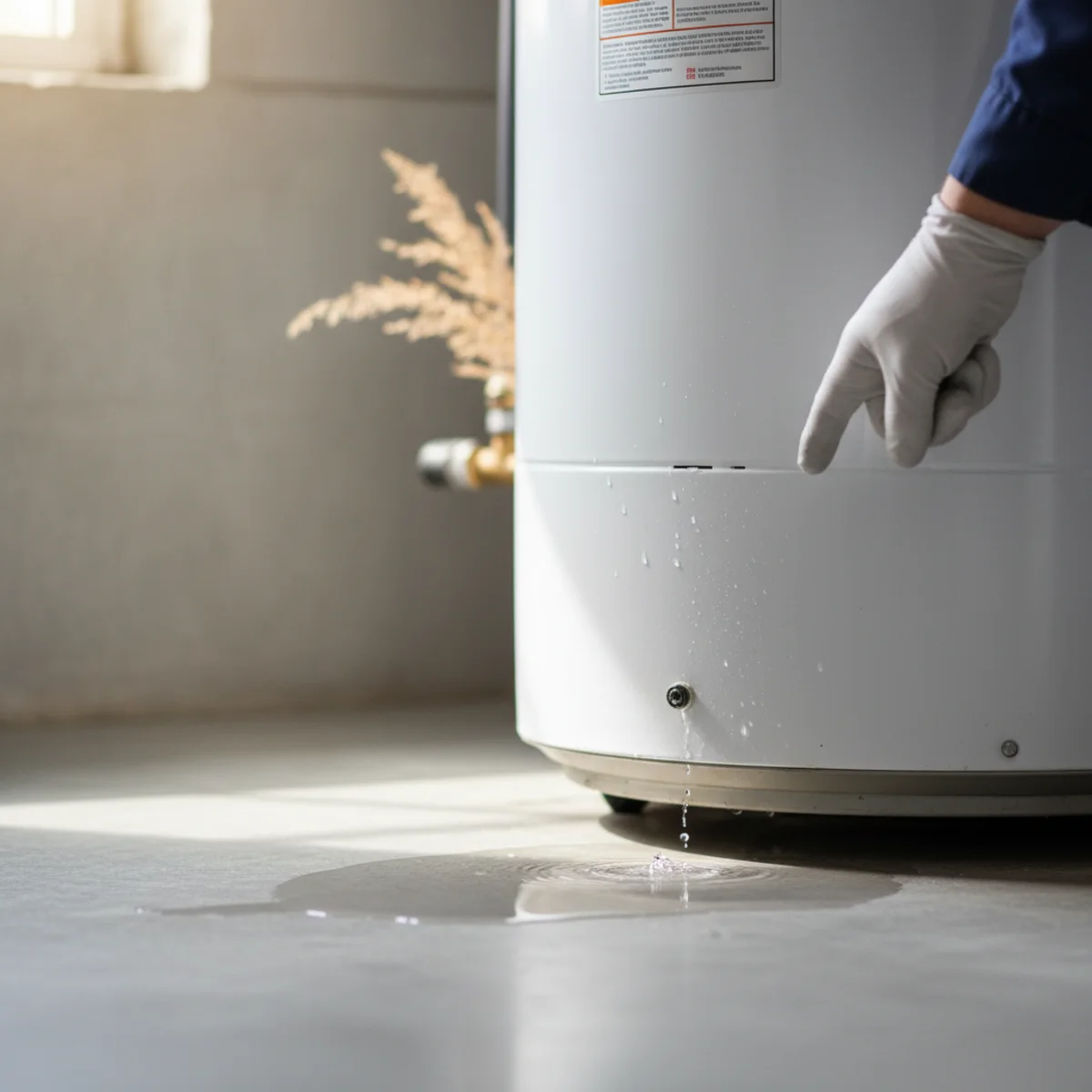
Why Is My Water Heater Leaking? Causes and Fixes
A water heater leak isn't automatically a catastrophe, but you need to know where it's coming from fast. Some causes are simple fixes; others mean the unit is done.
7 min read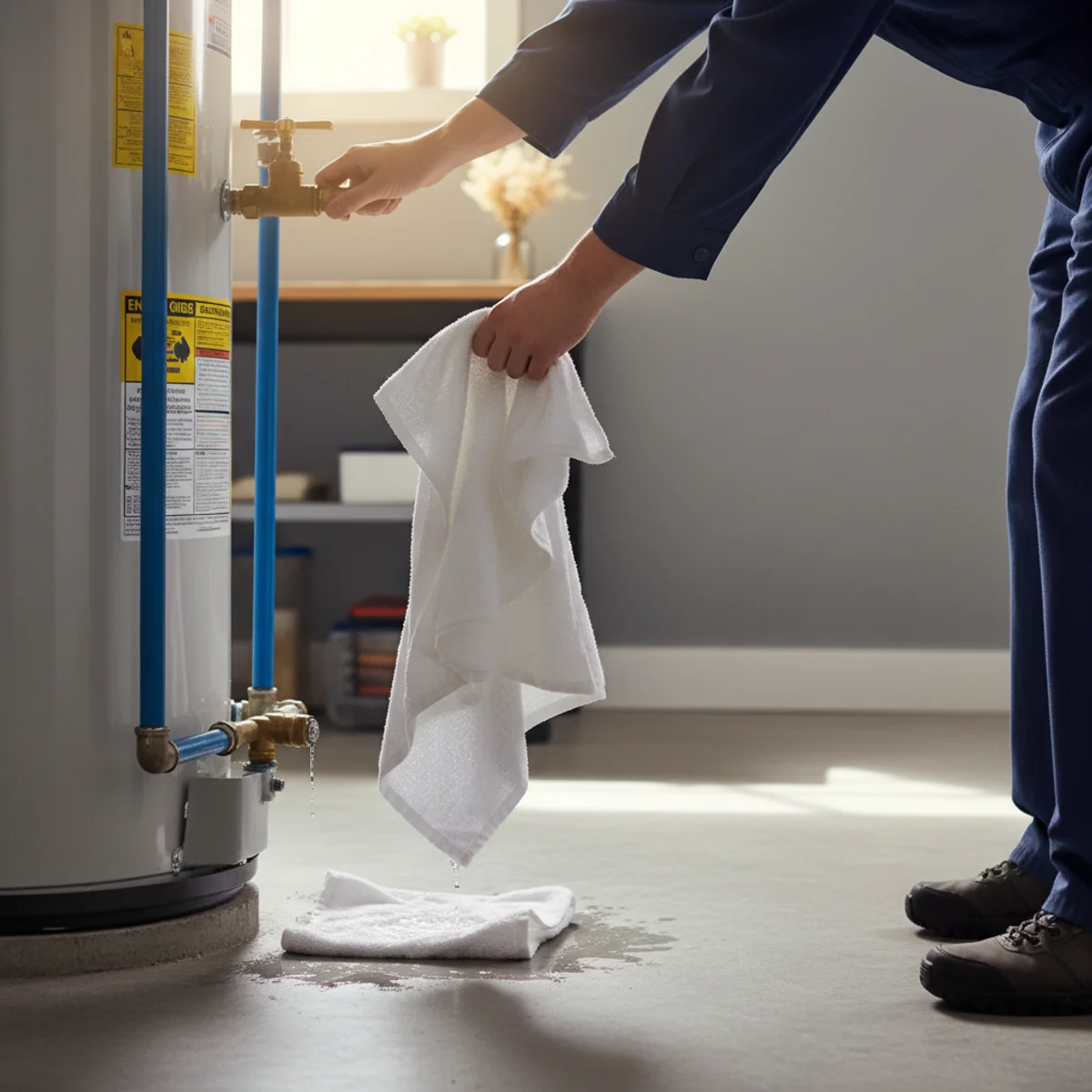
Water Heater Leaking From the Bottom? Do These 5 Things Now
A puddle under your water heater isn't always a catastrophe — but it demands fast action. Here is exactly what to do in the first fifteen minutes.
6 min read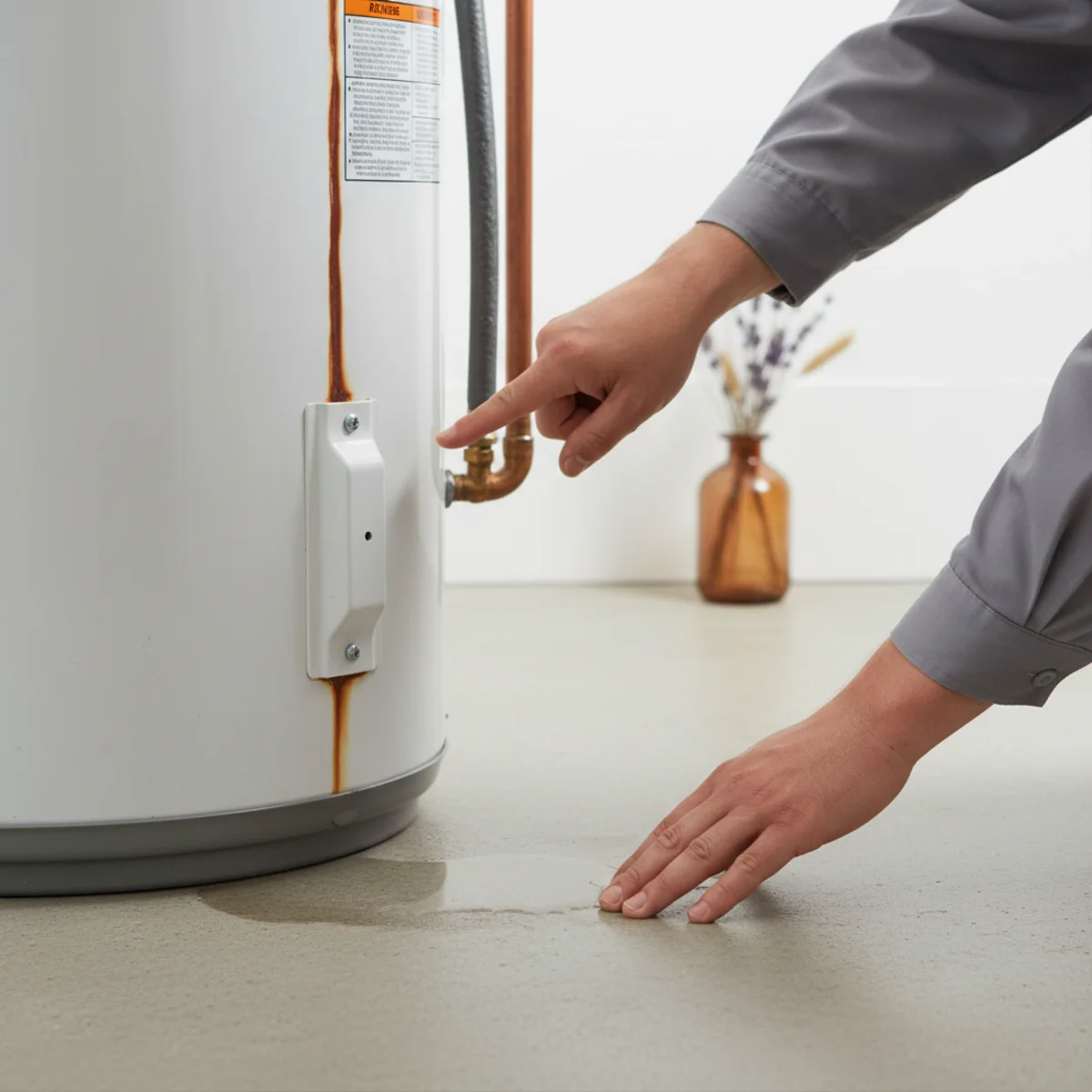
7 Signs Your Water Heater Is Going Bad
Catching the signs your water heater is going bad early is the difference between a planned replacement and a flooded utility room. These 7 warning signs are worth knowing.
7 min readCall now for water heater service in Lebanon, PA
Repair, replacement, installation, or tankless — talk to a local crew that knows Lebanon County homes and hard water.
Same-day appointments available • Emergency water heater help