Water Heater Leaking From the Bottom? Do These 5 Things Now
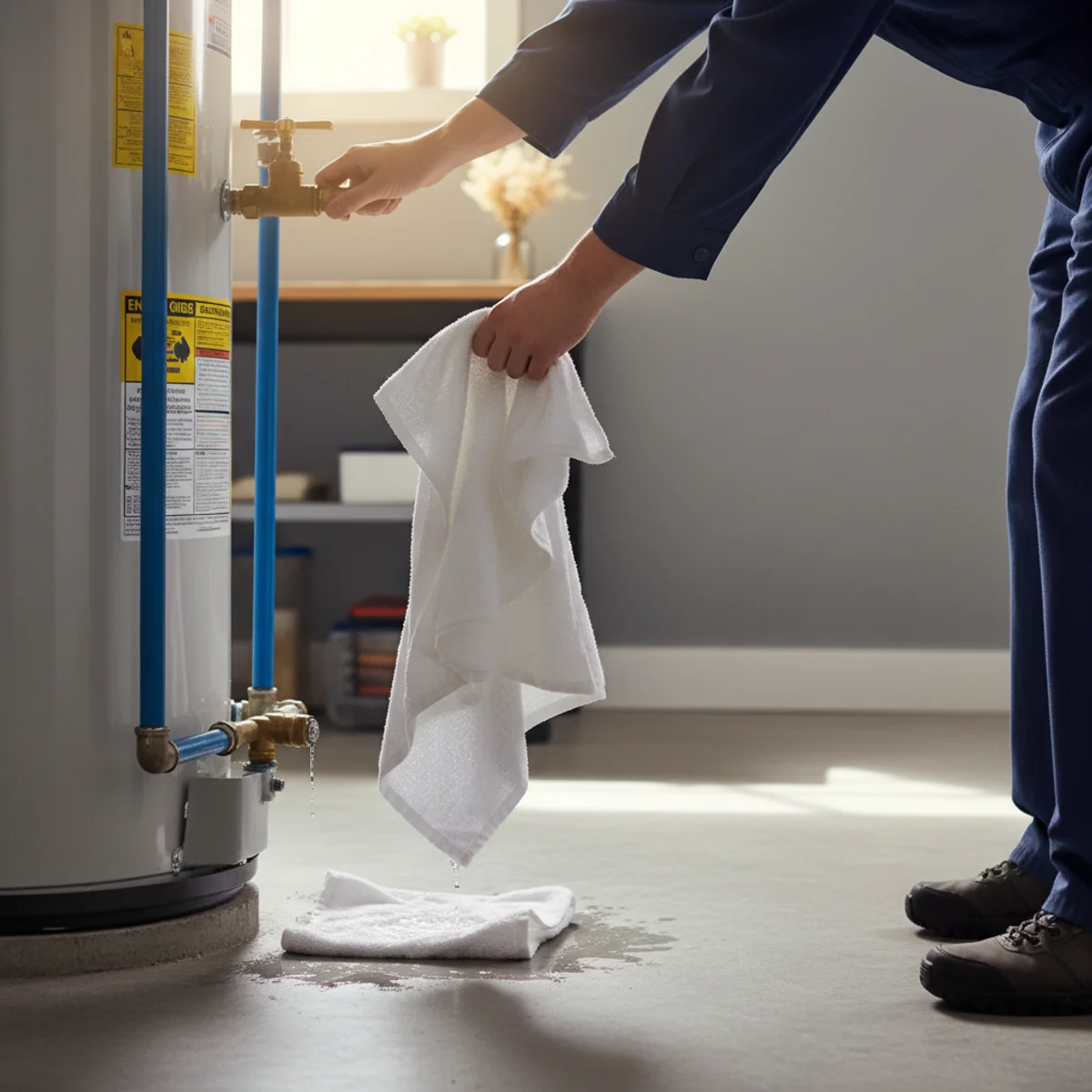
You walk into the basement and your foot lands in cold water. Your water heater is leaking from the bottom, and your first instinct is panic. Take a breath — you have time to do five specific things that can save your floors, your subfloor, and possibly the unit itself. Move quickly but deliberately.
Step 1 — Shut Off the Cold-Water Supply
Find the cold-water inlet pipe at the top of the tank. It usually has a dedicated shut-off valve — a gate valve (round handle) or a ball valve (lever). Turn it clockwise to close it. If the valve is corroded or stuck and won't budge, go to your home's main water shut-off instead. Stopping the water supply immediately slows any active flow and prevents the tank from refilling under pressure while you figure out what's going on.
Do not skip this step hoping the leak is "just condensation." On a humid Lebanon County summer morning, condensation is possible, but a persistent puddle — especially one that returns after you wipe it up — almost always means a real leak.
Step 2 — Turn Off the Heat Source
For a gas water heater, rotate the thermostat dial to the PILOT position. This keeps the pilot light alive but stops the main burner from firing, so you aren't heating water that is draining onto your floor. For an electric unit, go to your breaker panel and flip the dedicated 240-volt breaker for the water heater to OFF. Label it if it isn't already — this matters every time you service the tank.
Running a heater that is actively leaking risks overheating and accelerated damage to the tank lining and element. Kill the power first, then investigate.
Step 3 — Locate Where the Water Is Actually Coming From
Not every bottom leak originates at the bottom. Water travels. Dry the floor and the outside of the tank with old towels, then watch carefully for a minute or two. Common sources include:
- T&P relief valve: The temperature-and-pressure valve on the side of the tank has a discharge pipe that usually routes down near the floor. If this valve is weeping, it signals the tank is running too hot or at too-high pressure — a water heater repair call, not a DIY fix.
- Drain valve: The plastic or brass spigot near the base corrodes or loosens over time. A weeping drain valve is sometimes the cheapest fix on the list — a new valve costs a few dollars — but it still needs proper service.
- Tank shell corrosion: If water is seeping through the tank body itself, the interior has rusted through. There is no patch for this. Replacement is the only answer.
- Inlet or outlet connections: Fittings at the top of the tank can drip and run down the side, pooling at the base. These are often fixable without replacing the full unit.
Step 4 — Protect the Surrounding Area
While you wait for service, lay down old towels or a wet-dry vacuum around the base. If the tank is in a finished area — a closet, a utility room with drywall — wet drywall can develop mold within 24 to 48 hours in Pennsylvania's humid seasons. A box fan aimed at the wet floor buys you time. Move cardboard boxes, stored items, or anything absorbent away from the water heater immediately.
If water has reached a wood subfloor, document it with photos. You may need that evidence for a homeowner's insurance claim, and some Lebanon County policies do cover sudden water-heater failures.
Step 5 — Call for Emergency Water Heater Service
Once the water is stopped and the heat is off, this is where you pick up the phone. A trained eye can confirm whether you are dealing with a repairable component — drain valve, anode rod connection, inlet fitting — or a corroded tank that needs full replacement. Trying to guess without opening things up often wastes time and money.
Hard water is extremely common in Lebanon County. The local municipal supply and many private wells deliver high-mineral water that deposits sediment at the bottom of a tank year after year. That layer of sediment corrodes the tank lining from the inside, which is why Lebanon homeowners sometimes see bottom leaks in tanks that are only eight or ten years old rather than the twelve-to-fifteen-year range typical in softer-water areas.
When Is Repair Worth It vs. Replacement?
If the tank is under eight years old and the leak is coming from a fitting, valve, or the T&P discharge pipe rather than the shell, repair usually makes financial sense. If the tank is ten-plus years old, has visible rust on the shell, or the leak is through the tank body, water heater replacement is nearly always the smarter investment. Patching a corroded tank is not a real repair — it is a delay.
Upfront price before any work begins is how we operate. You will know exactly what repair or replacement costs before a single wrench turns. No surprises at invoice time.
What to Do Right Now
A water heater leaking from the bottom needs a same-day look — not a wait-and-see. Our local crew serves Lebanon and surrounding Central PA communities and can often reach you the same day you call. Call us at (201) 277-9344 or schedule emergency water heater service online and we will get eyes on it before the problem gets worse.
Related water heater services
Written by the team at Lebanon Water Heater Pros. This article is general information for Lebanon-area homeowners, not a substitute for an on-site diagnosis. For suspected gas leaks, leave the home and call your gas utility or 911 — do not attempt gas repairs yourself.
Good questions
Frequently Asked Questions
Keep reading
Related articles
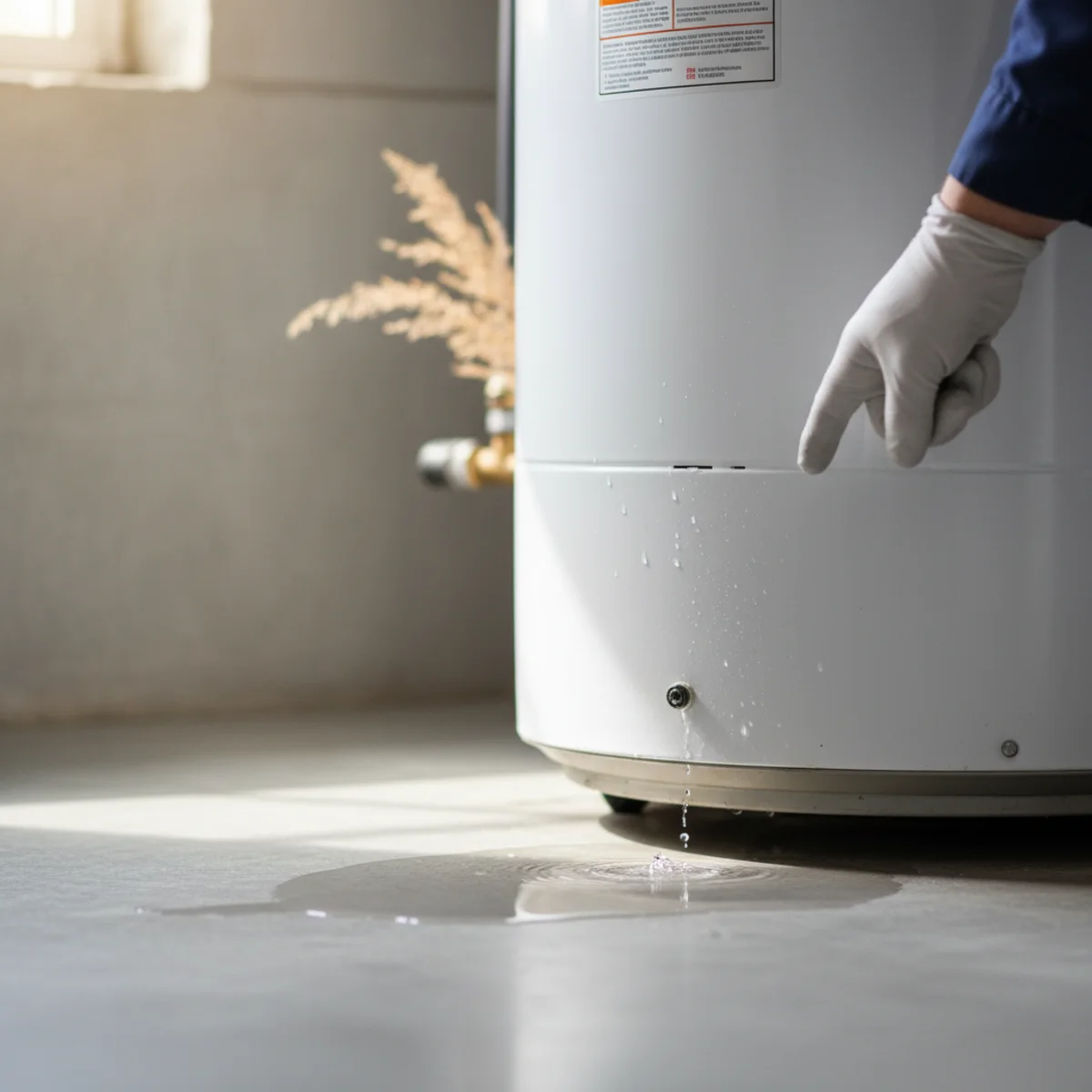
Why Is My Water Heater Leaking? Causes and Fixes
A water heater leak isn't automatically a catastrophe, but you need to know where it's coming from fast. Some causes are simple fixes; others mean the unit is done.
7 min read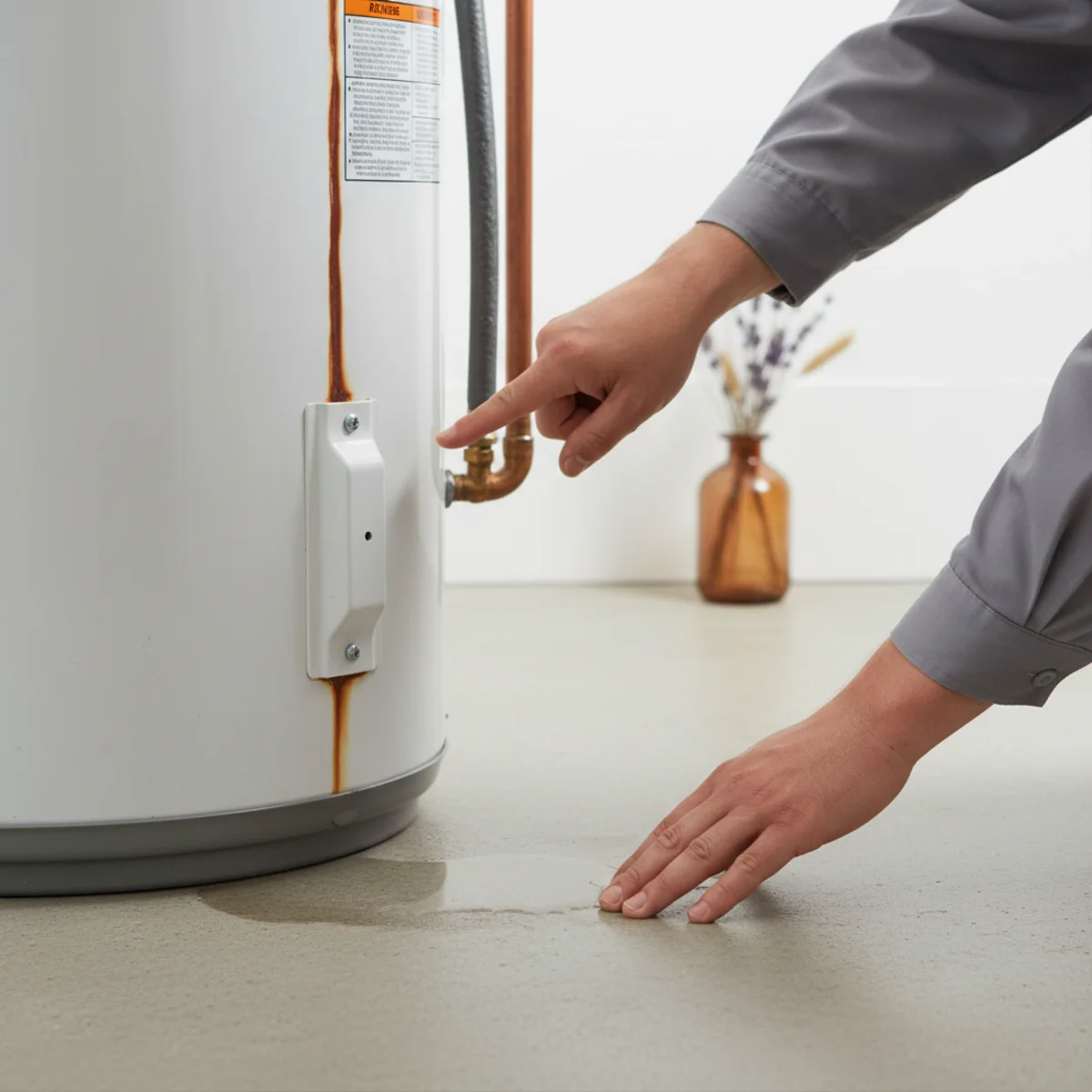
7 Signs Your Water Heater Is Going Bad
Catching the signs your water heater is going bad early is the difference between a planned replacement and a flooded utility room. These 7 warning signs are worth knowing.
7 min read