Winter Water Heater Problems in Pennsylvania (and How to Prevent Them)
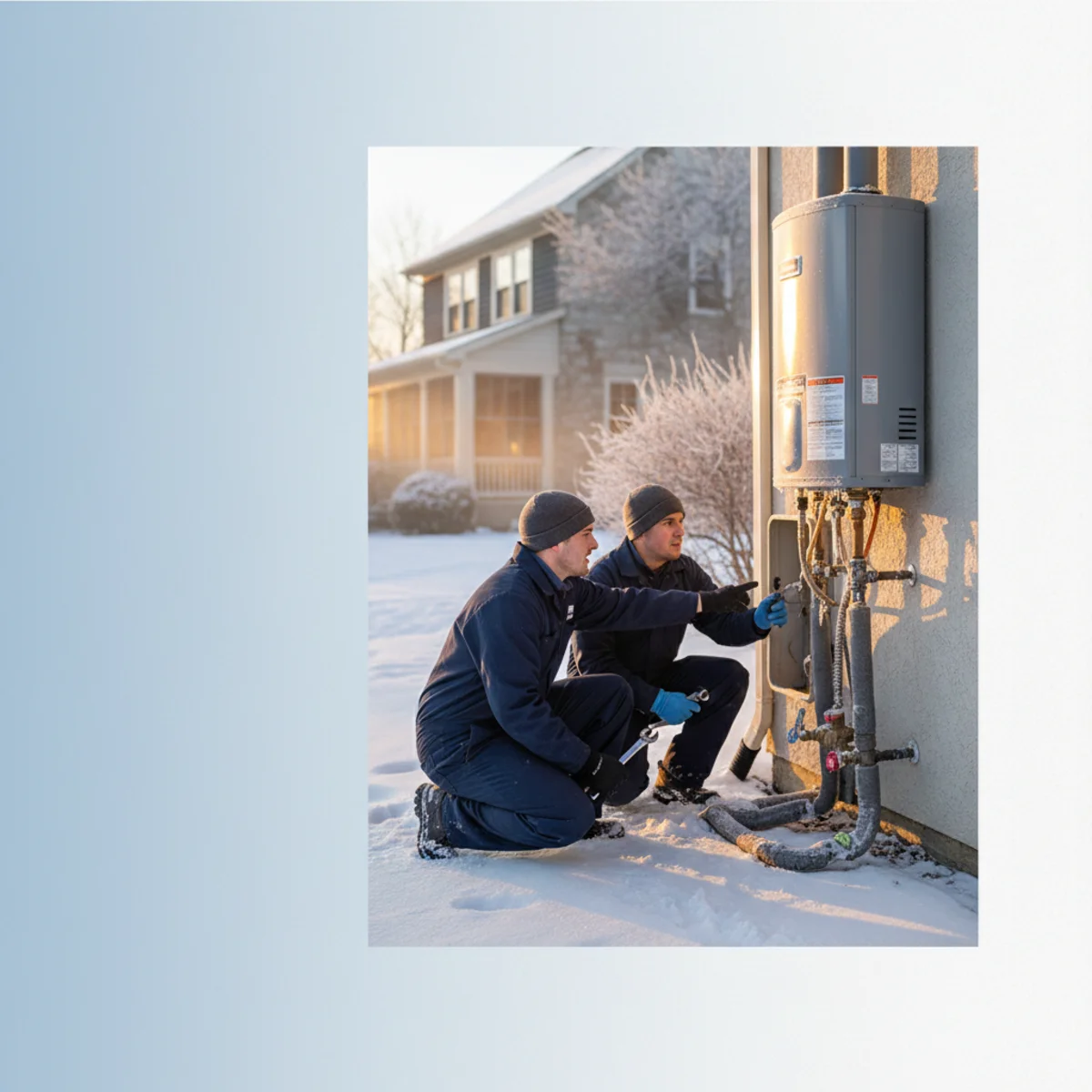
Lebanon County winters are not the kind you ignore. When January temperatures drop into the teens and stay there for a week, basements get cold, groundwater arrives at your water heater colder than it does in July, and any deferred maintenance catches up with you. Water heaters that limped through summer stop delivering in winter — and the timing is always worse. Here is what actually happens to water heaters in Pennsylvania winters and what you can do about it before the cold sets in.
Why Your Water Heater Works Harder in Winter
The core physics is simple. In summer, groundwater in Central PA typically enters your water heater at 60 to 65 degrees Fahrenheit. In January, that same water may arrive at 40 to 45 degrees. Your water heater has to raise the water temperature to 120 degrees or more regardless of the starting point — but that extra 20-degree gap means more energy consumption, longer recovery times, and more demand on aging components.
A water heater that could keep up with a household of four in July may struggle in January — not because it has failed, but because it is now doing 40 percent more heating work per gallon. Units already running inefficiently due to sediment buildup or a weakening element hit a wall they didn't hit in warmer months.
Longer Recovery Times and "Running Out" of Hot Water
Recovery time is how long your tank takes to reheat a full load of cold water after heavy use. In winter, recovery is slower because the incoming water is colder and, in many Lebanon County homes, the basement ambient temperature is lower — reducing the efficiency of gas combustion and slowing heat transfer.
If your family has always managed with a 40-gallon tank but starts running short on hot water in January, the unit itself may be fine — it just needs more time between heavy uses during the cold months. Adjusting shower schedules, staggering the dishwasher and laundry, or simply waiting 30 to 45 minutes between back-to-back showers is often enough.
If the recovery problem is severe — like the fourth shower getting cold water after the second — sediment is probably compounding the winter demand issue. Professional water heater maintenance and a flush in the fall, before hard cold sets in, is the most effective prevention.
Frozen Pipes Near the Water Heater
Most Lebanon County homes keep the water heater in a conditioned basement, but the pipes serving it — particularly the cold supply line running through an exterior wall or along an uninsulated rim joist — can freeze when temperatures drop hard. A frozen supply line means no water gets to the heater at all. A frozen pipe that thaws and bursts is a bigger problem.
Signs of a frozen supply line: you have pressure at cold-water taps but the water heater produces nothing and there is no obvious appliance failure. Check the cold-water shut-off valve above the water heater to confirm it is open, then look for any segment of the supply pipe that runs through an unheated space.
Prevention: insulate cold supply lines in unheated areas with foam pipe insulation — it is inexpensive and takes an hour. If you have had a frozen pipe before, consider pipe heat tape on the vulnerable section. Our pipe repair team handles frozen pipe thawing and burst pipe repair if the worst happens.
Pressure Relief Valve Weeping in Cold Weather
The T&P (temperature and pressure) relief valve is a safety device that opens if the tank overheats or over-pressurizes. In winter, a few things can cause it to weep slightly: thermal expansion from cold inlet water warming rapidly, higher-than-normal water main pressure during cold snaps when municipal systems adjust, or simply an aging valve that no longer seats perfectly.
A T&P valve that drips occasionally and stops is worth monitoring but may not indicate a crisis. A T&P valve that runs continuously or discharges hot water repeatedly is signaling a real pressure or temperature problem that needs a plumber — not a homeowner fix. Never cap or plug a T&P valve. It is the last line of defense against a tank rupture.
Pilot Light and Ignition Problems in Cold Basements
Gas water heaters draw combustion air from the surrounding space. In very cold basements, the air is denser and the combustion dynamics can shift slightly. More commonly, cold conditions unmask a thermocouple or pilot orifice that was marginal in warm weather but fails to perform reliably when the basement temperature drops to 45 degrees. If your pilot goes out more frequently in winter than summer, the thermocouple is likely at the end of its life. See our detailed guide on pilot issues in gas water heater service.
Fall Maintenance: The Best Winter Insurance
The most effective way to avoid a winter water heater crisis is a fall maintenance visit — before October. That means flushing sediment, inspecting and replacing the anode rod if needed, testing the T&P valve, checking the thermocouple condition on gas units, inspecting venting for any blockage from summer (birds' nests in roof caps are a real occurrence in Lebanon County), and verifying that the thermostat is set correctly.
Hard water sediment is worse in late fall than in spring because the unit has accumulated a full year's worth. A fall flush going into winter leaves the tank clean, efficient, and ready for the increased demand of cold months.
Don't Wait for a Cold Shower to Call
Our water heater repair team handles winter emergencies across Lebanon, Palmyra, Annville, Jonestown, Myerstown, and surrounding areas. Same-day availability on most calls, upfront pricing before any work begins, licensed and insured service approach. But the call you make in October costs less and causes less disruption than the call you make at 6 a.m. on a January morning.
Call (201) 277-9344 or schedule your fall maintenance visit online. A local crew that knows Central Pennsylvania winters will have your water heater ready before the hard cold hits.
Related water heater services
Written by the team at Lebanon Water Heater Pros. This article is general information for Lebanon-area homeowners, not a substitute for an on-site diagnosis. For suspected gas leaks, leave the home and call your gas utility or 911 — do not attempt gas repairs yourself.
Good questions
Frequently Asked Questions
Keep reading
Related articles
No Hot Water? A Step-by-Step Troubleshooting Guide
No hot water is one of the most frustrating household problems—but it has a short list of causes. Work through this guide to find yours and know what to do next.
7 min read
The Annual Water Heater Maintenance Checklist
Annual water heater maintenance takes less than an hour and can add years to your unit's life. This checklist covers every task worth doing—especially in Lebanon County's hard water.
7 min read