Gas Water Heater Pilot Light Keeps Going Out? Here's Why
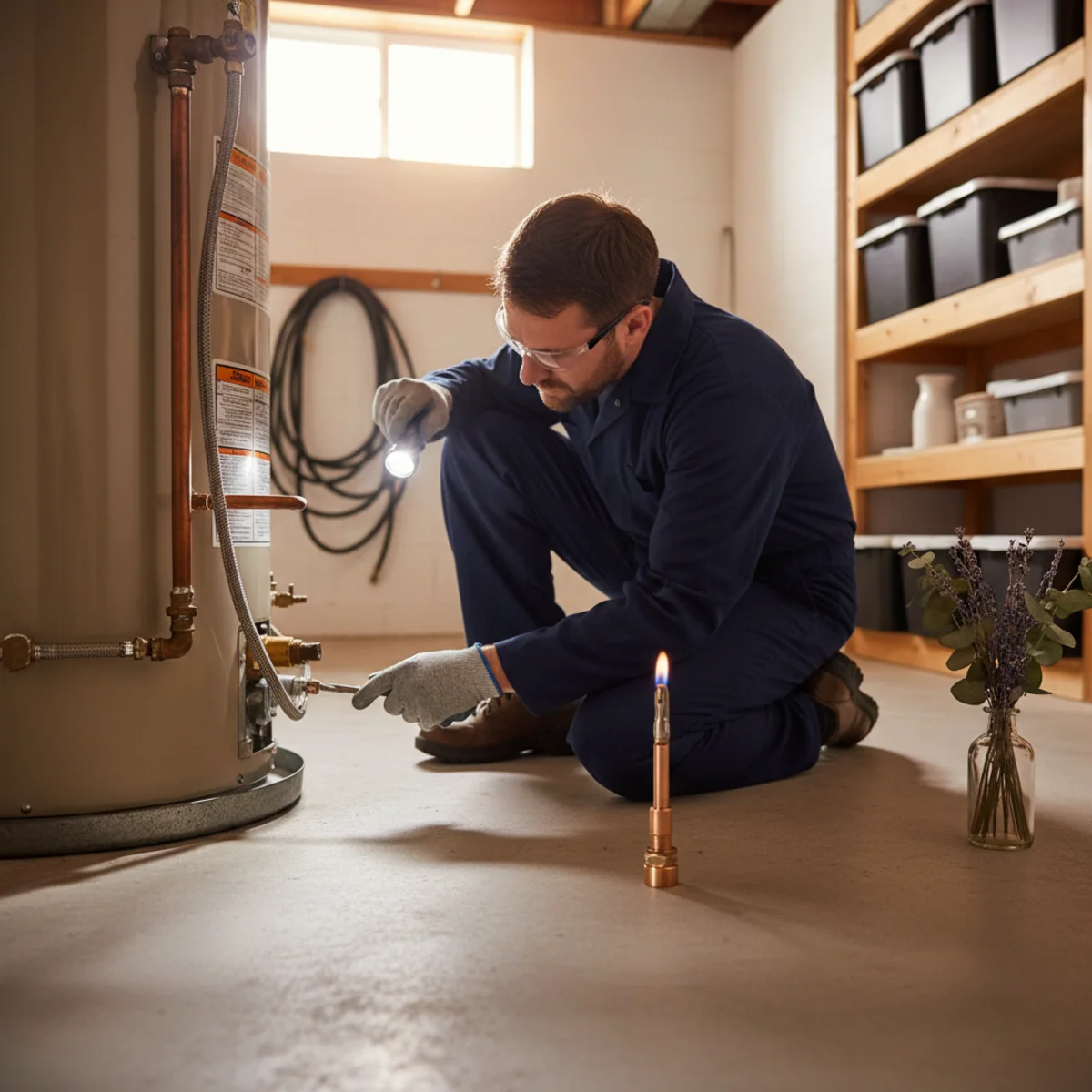
You relight the pilot on your gas water heater, hold the button for the full 60 seconds, let go — and the flame dies again within a day or two. It is one of the most aggravating problems a gas water heater can throw at you, and it almost always has a mechanical cause that can be fixed without replacing the whole unit. The key is knowing which part is failing.
Safety first, always: if you smell gas near your water heater, do not attempt to relight anything. Leave the house, call your gas utility or 911 from outside, and stay out until cleared. A pilot that keeps going out is a nuisance; a suspected gas leak is an emergency.
The Thermocouple: Most Likely Culprit
The thermocouple is a small probe that sits in the pilot flame. When the pilot is burning, the flame heats the thermocouple tip and generates a tiny electrical voltage — just enough to hold the gas valve open. If the thermocouple does not produce enough voltage (because it is old, dirty, or bent out of position), the gas valve interprets that as "no flame" and shuts off the gas to the pilot. No gas, no flame. The cycle repeats every time you relight.
Thermocouples typically last six to ten years, but hard water vapor, sediment dust, and normal thermal cycling all shorten that lifespan. A thermocouple replacement is usually a straightforward repair — it is a standard part, not expensive, and the job takes under an hour in most cases.
How to Tell If the Thermocouple Is the Issue
- Pilot lights but dies within a minute of releasing the button: Classic thermocouple failure. The button manually holds the gas valve open; once you release it, only the thermocouple signal keeps the valve open. If that signal is too weak, the valve closes.
- Pilot re-lights easily but won't stay lit for more than a day or two: The thermocouple may be intermittently working — passing enough signal when it's cold but failing under heat.
- Tip looks dirty or coated: Carbon buildup on the thermocouple tip can insulate it from the flame, reducing voltage output. Cleaning with fine steel wool sometimes helps temporarily, but replacement is usually the better call.
Thermopile vs. Thermocouple: What's the Difference?
Newer water heaters — especially those with electronic displays, remote ignition, or energy-efficiency features — use a thermopile instead of a simple thermocouple. A thermopile is essentially a cluster of thermocouples wired together, generating more voltage to power a digital gas valve. The failure mode is similar (not enough voltage to keep the valve open), but thermopiles are a bit more expensive to replace and the diagnosis can be slightly more involved.
If your unit has a digital control panel or an electronic status light, it almost certainly uses a thermopile. When that component fails, the pilot may behave exactly as described above, or the unit may display an error code.
Other Reasons a Pilot Keeps Going Out
A faulty thermocouple or thermopile is the most common cause, but not the only one. A pilot that reliably keeps going out could also trace to:
- Dirty pilot orifice: Dust and debris can partially block the small orifice that meters gas to the pilot, producing a weak, unstable flame that doesn't heat the thermocouple reliably. The fix is cleaning the orifice — a delicate job.
- Flex tubing kink or gas supply issue: Restricted gas flow to the pilot produces a flame too small to work properly. Check that the flex connector to the unit is not kinked.
- Drafts: A pilot located near a floor-level air draft — from a cracked basement window, a gap in the water heater's combustion air supply, or a nearby exhaust fan — can blow out repeatedly. This is more common in older Lebanon homes with drafty basements.
- Failed gas control valve: Less common, but a gas control valve that is failing internally can cause intermittent pilot behavior. This is a more significant repair — the valve assembly on older units can cost as much as a new entry-level water heater.
Should You Try to Fix It Yourself?
Relighting the pilot following the manufacturer's printed instructions on the unit is generally safe and is something homeowners do routinely. Cleaning the thermocouple tip is also reasonable if you are comfortable around gas appliances and follow the safety steps precisely.
Replacing the thermocouple or thermopile is a step further. It requires disconnecting a gas line fitting and working near gas supply components. If you are not experienced with gas appliance repair, have a licensed plumber do it. The part cost is modest; the labor is not worth a gas-related incident.
For anything beyond a thermocouple swap — gas valve replacement, flue issues, combustion air problems — call a professional. Our gas water heater service team carries common thermocouple and thermopile parts on the truck, so most pilot repairs are same-day.
When the Pilot Problem Points to Replacement
If your water heater is older than 10 to 12 years and the pilot is going out, it is worth having an honest conversation about replacement versus repair. A thermocouple on a 12-year-old unit is a reasonable fix if the tank itself is in good shape. But if the tank is also showing signs of corrosion, if you've had multiple repairs in the past two years, or if the unit requires a gas valve replacement, putting that money toward a new unit usually makes more sense.
Our water heater repair technicians will give you a straight answer on whether repair or replacement is the smarter call — upfront, before any work begins.
Get It Fixed Today
A pilot that keeps going out means cold showers and frustration. It rarely fixes itself. Call (201) 277-9344 or book online through our gas water heater service page. We serve Lebanon, Palmyra, Annville, Myerstown, and surrounding communities in Lebanon County with same-day availability on most calls.
Related water heater services
Written by the team at Lebanon Water Heater Pros. This article is general information for Lebanon-area homeowners, not a substitute for an on-site diagnosis. For suspected gas leaks, leave the home and call your gas utility or 911 — do not attempt gas repairs yourself.
Good questions
Frequently Asked Questions
Keep reading
Related articles
No Hot Water? A Step-by-Step Troubleshooting Guide
No hot water is one of the most frustrating household problems—but it has a short list of causes. Work through this guide to find yours and know what to do next.
7 min read
Why Does My Hot Water Smell Like Rotten Eggs?
That sulfur smell from your hot water tap comes from a chemical reaction inside your water heater. It is fixable -- but it matters which cause you're dealing with before you start.
6 min read